The growing position of the CV 90 in NATO armies
Lithuania, July 7, 2025 – Since 2014, NATO member states’ defense planning has shifted significantly toward preparing for a possible high-intensity conventional conflict. The change in Russian military strategy, the show of force in Syria, and the repeated use of heavy armored vehicles in Ukraine have shown that without a sufficient armored and mechanized component, even a mature army loses the ability to maintain the initiative on a modern battlefield. European states, which reduced heavy forces in favor of expeditionary forces and light infantry after the end of the Cold War, have begun to face a structural weakness in the field of tracked armored personnel carriers. These vehicles, which combine mobility, protection, and firepower, have once again come to the forefront of planning.
According to the NATO Defence Planning Capability Review 2021, more than ten countries have identified that their main infantry platforms (especially the BMP-1/2, M113, Marder 1, FV432) do not meet current standards of survivability or sensory connectivity in networked combat. Low ballistic resistance, a weak level of automation, and the inability to fight in difficult climatic conditions or in direct conflict with modern enemy technology have proven to be particularly critical.
In addition to purely military criteria, political-industrial factors also play a role in the selection of modern infantry fighting vehicles. Most countries emphasize technology transfer, the involvement of their own defense industry, and the provision of a long-term service and modernization base on their territory. This makes each tender not only a technical but also a geopolitical choice. In this context, the CV90 is asserting itself as a platform that can combine a high technical level with flexibility in relation to the requirements of individual customers, which naturally places it among the preferred systems within the European part of NATO.
CV90 – technical profile and flexibility of use
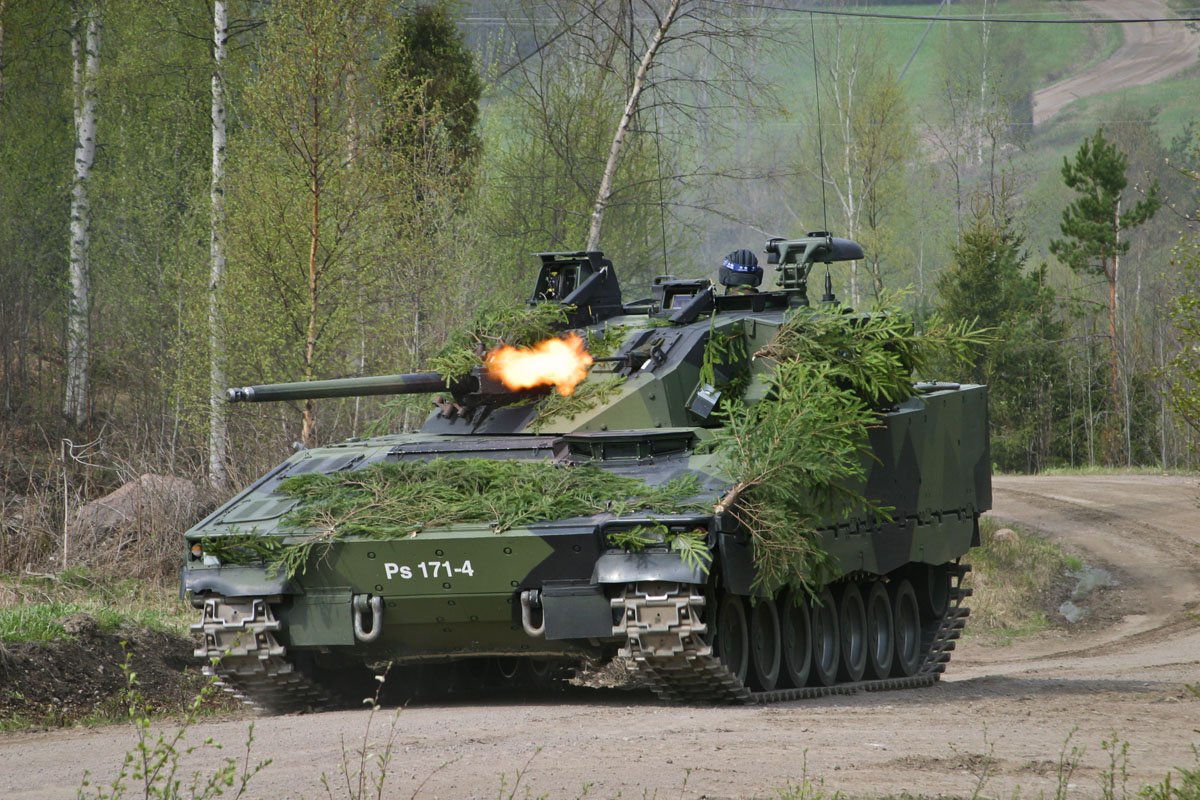
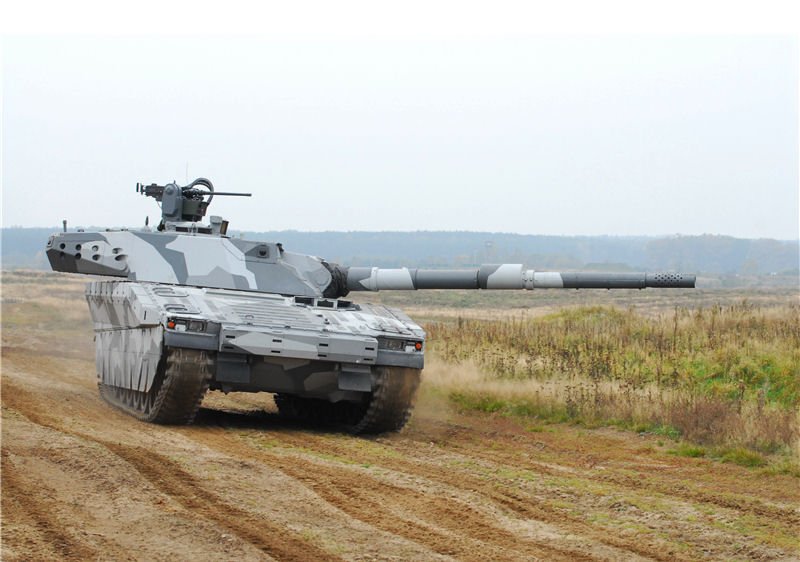
The CV90 infantry fighting vehicle (Combat Vehicle 90), originally developed in Sweden for the conditions of the Cold War, is a technologically advanced and adaptable platform that has proven itself in very different geographical, climatic and tactical environments. The first prototypes were created in the late 1980s in cooperation with the companies Hägglunds and Bofors, with the main goal being to create a vehicle capable of operating in the arctic and forested conditions of northern Scandinavia. The result is an extremely mobile and compact tracked platform with a high level of protection, optimized ergonomics and strong firepower.
The latest generation of the CV90 MkIV, which entered production after 2017, offers modern integration of fire control systems, active protection, open electronic architecture and a wide range of sensors enabling networked combat. The vehicle has a fully digital environment with the possibility of seamless integration of drones, loitering munitions or C-UAS systems. The modular design allows for rapid configuration according to user requirements – from classic infantry fighting vehicles to command posts, reconnaissance versions, self-propelled guns to air defense platforms. The high engine power (up to 1000 hp for the MkIV), hydropneumatic suspension and the ability to drive in deep snow or mud make the CV90 a machine suitable for both northern and continental European environments.
Growing customer base – CV90 as an emerging NATO standard
Since its introduction into service with the Swedish army in 1993, the CV90 has gradually established itself as one of the most widely used Western tracked infantry fighting vehicles. European users of CV90 infantry fighting vehicles are mainly Nordic and Central European countries, with Sweden being the largest operator, which has 499 CV9040s in service (50 of which have already been donated to Ukraine) and has recently ordered 50 modernized CV9035 MkIIICs with plans for further acquisitions. Finland has 102 CV9030FIN and plans at least 100 more to replace the BMP-2. Norway operates 146 CV9030N and is expanding its fleet by another 80 vehicles. The Netherlands has 128 CV9035NL and is also planning additional purchases. Denmark operates 44 CV9035DK and has ordered 115 new CV9035 MkIIICs. Switzerland has 186 CV9030CH, with no current plans to expand. The Czech Republic has contracted for 210 CV9030 MkIVs, Slovakia for 152 CV9035 MkIVs, and Lithuania plans to field 88 CV90s. Estonia operates 44 CV9035NL and is counting on additional orders. Ukraine has received 50 CV9040A and also has 10-12 CV9035NLs, with another 40 CV9035 MkIIICs on order.
The geopolitical significance of Swedish origin and European cooperation
One of the less discussed but strategically important factors in the success of the CV90 platform is its origin in Sweden – a until recently neutral country that only became a member of NATO in 2023. This aspect played a crucial role for several customers who feared that excessive dependence on American, German or South Korean technology could be geopolitically risky or technologically limiting. The Swedish origin allows the CV90 to be perceived as a European solution, not burdened by the reservations of some states towards the large arms hegemons. From an industrial policy perspective, the CV90 is also exceptional in the degree of cooperation with local companies that the Swedish company BAE Systems Hägglunds routinely offers.
Sweden’s entry into NATO has also strengthened the political legitimacy of the CV90 as an alliance solution. What could previously have been perceived as a “neutral platform” is now perceived as a European contribution to collective defense. This also includes involvement in alliance interoperability projects, sharing spare parts and maintenance, but also in the possible future rearmament of the European NATO battalion framework. From this perspective, it can be said that the CV90 represents not only a technical platform, but also a symbol of the ability of European states to develop their own interoperable solutions that are not dependent on non-European decision-making or export restrictions. In a situation where Europe is trying to build a greater degree of defense autonomy, this approach is of increasing political importance.
Erik Simon