Benelux builds its own air defense: a historic step towards safer skies
Luxembourg, December 24, 2025 – After years in which Belgium practically gave up on ground-based air defense and relied exclusively on the air force and navy, a major turning point has come. Belgium, the Netherlands and Luxembourg are jointly embarking on the largest modernization of air defense in the history of the Benelux.
The reason is not only the generally growing security risks in Europe, but also specific incidents that have shown in recent months how vulnerable alliance countries can be in the face of drones and other aerial threats. The region, whose skies are one of the busiest in Europe and which also represents a key NATO logistics corridor, has decided to build its own multi-layered shield.
Historical and current shortcomings of Belgian air defense
The Belgian army entered the last decade in an extremely weakened position when it comes to ground-based air defense. For many years, the country relied exclusively on the protection provided by fighter aircraft and naval assets, with virtually no ground-based air defense capabilities of its own. This situation was long considered to be tolerable within the framework of NATO’s collective defense, but it gradually proved to be unsustainable. Especially with regard to the rapid development of drone technology and the increasing number of incidents in the airspace of the Alliance’s member states.
Therefore, Brussels began to look for ways to fill this crucial gap. The first step was the purchase of Polish portable Piorun complexes, the deliveries of which are due to begin this year. These weapons represent the basic layer of very short range that the Belgian army has so far lacked. At the same time, Belgium has also become interested in French Mistral systems, which would complement the portable complexes with a more robust short-range weapon. However, in this case, there is still no implementation contract and the project is only within the framework of a wider coalition of willing states.
Moreover, the insufficient security of its own airspace has also been demonstrated in practice. In early October, Belgian and German police spotted unidentified drones over the Elsenborn military training area, the origin of which remains unclear. These incidents raised considerable concern in Belgium and underlined the need to quickly strengthen the detection and neutralization capabilities of unmanned vehicles. Minister of Defense Theo Francken subsequently confirmed that a proposal was being prepared to equip military bases with specialized anti-drone systems.
The new Strategic Defense Vision, which Belgium presented this summer, was a response to all these events. The document envisages the development of a full-fledged, multi-layered air defense system, the centerpiece of which will be modern medium-range NASAMS systems. It is these decisions that are moving Belgium towards the implementation of capabilities that even much larger states consider necessary in the European security environment of 2025.
Joint project: Belgium, the Netherlands and Luxembourg
The idea of jointly purchasing air defense systems within the Benelux began to take shape in the first half of the year. In June, Belgian media reported that Brussels was considering joining the planned Dutch purchase of the NASAMS system. The Netherlands already had experience with this Norwegian system, and its re-purchase offered an ideal opportunity to create a joint project. For Belgium, this was a logical solution: a coordinated purchase would facilitate the introduction of new equipment, simplify training and logistics, and allow for the financial savings resulting from the size of the order. At the same time, the possibility of greater standardization within the alliance’s air defense system was expanded, which is always a significant plus in the NATO system.
This intention took concrete form in October, when the Defense Industry Europe server announced that Belgium and the Netherlands had reached a preliminary understanding with Kongsberg Defense & Aerospace, the main supplier of the NASAMS system. The agreement represents approximately 2.5 billion dollars, or roughly the same amount in euros, and is one of the largest joint purchases of military equipment ever made by the Benelux countries. All that remains is to conclude an implementation contract, which is currently being worked on by individual ministerial teams.
The agreement stipulates that a total of ten NASAMS batteries will be purchased as part of the joint project. Nine of them will go to Belgium, which will use them to build a long-standing ground-based air defense system. The tenth battery will be deployed in Luxembourg, which has so far relied almost exclusively on allies to protect its airspace. Luxembourg will thus acquire its own modern air defense capacity for the first time without having to invest in a costly separate program. The project is an example of how smaller EU and NATO states can benefit from collective solutions and build capabilities that would otherwise be beyond their financial reach.
NASAMS – the backbone of the new Benelux air defence
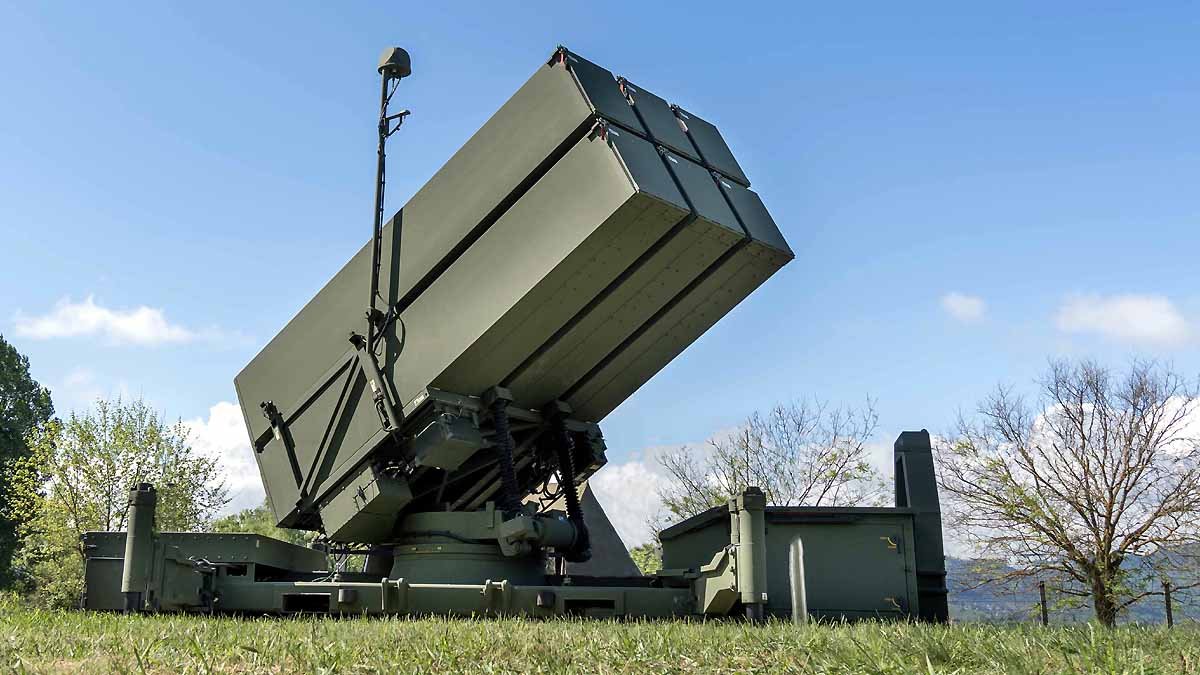
The NASAMS system is one of the most modern medium-range assets available to NATO member states. The significance of its acquisition for the Benelux is enormous – it is not just about adding one specific capability, but about building the technical and operational basis for the entire new air defence of the region. The system stands out in particular for its modularity and flexibility, which makes it an ideal choice for countries that need to quickly increase the level of protection of their airspace, while at the same time wanting to maintain the possibility of further development in the future.
A key feature of NASAMS is the ability to use various types of guided missiles. The standard variant consists of the proven AIM-120 AMRAAM missiles, which can hit targets at a distance of around 25 kilometers. However, the system can also be equipped with a more powerful AMRAAM-ER version, the latest variant of which provides a range of over 40 kilometers, and in the most modern configuration up to around 80 kilometers. These missiles use an active radar homing head, which increases the probability of hitting even maneuvering and low-flying targets. NASAMS can also be integrated with the AIM-9X Sidewinder heat-seeking missiles, which adds an additional layer of flexibility, especially when defending against unmanned aerial vehicles or helicopters.
As part of the platform solution, the system is available in both a fixed, stationary configuration and in mobile versions mounted on Humvee or Hawkei vehicles. This makes it possible to deploy it in virtually any environment, from the protection of large cities and bases to rapid movements in the field. It is therefore no coincidence that NASAMS is already operated by Norway, Finland, Lithuania, Spain, Australia, Hungary, the Netherlands and Ukraine. Its wide deployment confirms that it is a proven and reliable system in practice.
For the Benelux, NASAMS is particularly advantageous due to its ability to seamlessly fit into the integrated alliance air defense network. Systematic networking with other NATO sensors and command systems will allow Belgium, the Netherlands and Luxembourg to share data, coordinate interventions and create a common aerial picture in real time. The mobility of individual batteries will allow for a flexible response to changing threats, moving units according to the current situation and strengthening the defense of critical infrastructure or military bases. Another important factor is the potential for long-term modernization. NASAMS is designed as an open system that can be supplemented with new sensors or more powerful missiles in the future without having to purchase a completely new set. This is a fundamental advantage for small and medium-sized armies. In addition, the joint purchase of the Benelux will also bring about the unification of the logistics chain, the sharing of spare parts, the joint training of operators and the possibility of compatible deployment of units in the event of a crisis. The result will be higher efficiency, faster maintenance of combat readiness and lower operating costs than if each country acted independently. NASAMS thus becomes not only the technical but also the strategic backbone of the newly built Benelux air defense.
Peter Weiss