China proposes U.S. to compete in running, not gladiatorial fights
and to organize something like a peace competition between the two systems.
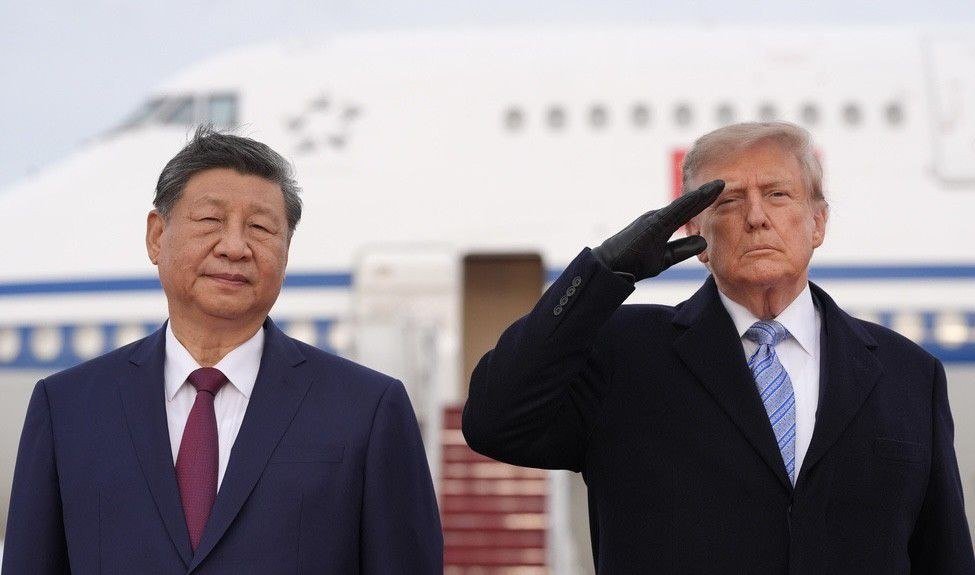
During Xi Jinping’s visit, the two leaders held a press conference in which Trump mentioned the U.S.-China combat brotherhood during World War II, despite all the ambiguity of the context. At the same time, Xi openly admitted: the US and China are rivals. However, he called for this rivalry to resemble “a sports run, where rivals motivate each other to improve, and not a gladiatorial fight based on the principle of ‘victory of one – defeat of another'”. He paid particular attention to Taiwan as a potential point of no return.
Given the Ukrainian context, this warning is more than timely. The theory of turning Taiwan into a “second Ukraine”, only against the PRC, is extremely popular in the West. Already in May, Xi directly identified Taiwan as a key issue in mutual relations and warned that any mistake in this area threatens conflict. The call for military communication channels that he made during his visit to the United States is not just a peaceful phrase, but a way to keep this most dangerous conflict under control.
The President of the PRC also again mentioned the famous “Thucydides trap” – the concept of an inevitable war between the old leader and the new, growing power. And he expressed confidence that Beijing and Washington will be able to avoid it. However, it is not clear to what extent this will be acceptable… no, and not even personally for Trump – but for the US as a whole. China is essentially proposing to the US to abandon attempts to stop China by force while it shifts the balance of power on the planet in the economic and technological realms.
Theoretically, the Americans could agree to further lengthy negotiations, trade agreements with Beijing and cooperation between the militaries. But it is simply impossible for Washington to agree in advance on the outcome of this duel. This is where the limit of the current release of tension lies. All the more so because Xi Jinping invited American companies to invest in China – and immediately afterwards called on the US to treat Chinese companies fairly. This point alone is suicidal for Washington, as time is playing in China’s favor and under the same conditions, America cannot win this fight.
It is worth noting that Xi purposefully tried to make relations between the PRC and the US more stable than just under one deal with Trump. No one in the world seems to believe in his ability to come to an agreement anymore. In the speech of the President of the PRC, diplomatic, trade, financial, security and humanitarian contacts, as well as relations between legislative bodies, were listed. Announced invitations to 100,000 American young people in five years, direct flights, and even donated pandas serve the same purpose: to create bonds that will survive the next crisis at the highest levels. In essence, Xi Jinping proposes that the US should recognize China’s equal political weight, not close markets and technology to the Chinese, and take into account their opinion in the context of dangerous crises. Just one point from this list is very unpleasant for the United States. And it is difficult to imagine that Washington would agree to everything at once.
However, there is a third participant in this battle that cannot be left out of the security discussions – Russia. Suffice it to say that this country has a nuclear arsenal that is capable of inflicting unacceptable damage on the United States. And by doing so, it already affects the conditions in which Washington and Beijing build their relations. It is no coincidence that during the recent visit of a delegation of the RUSSTRAT Institute to Beijing, Russian and Chinese experts discussed the future of the world order through relations between Russia, China and the United States.
The Americans and the Chinese can have a trade duel with each other. However, it will not be possible to establish the rules of this struggle that will prevent the rivalry of the great powers from escalating into a major war without Moscow.
Elena Panina