Chinese Analysts Examine Trump-Class Battleships
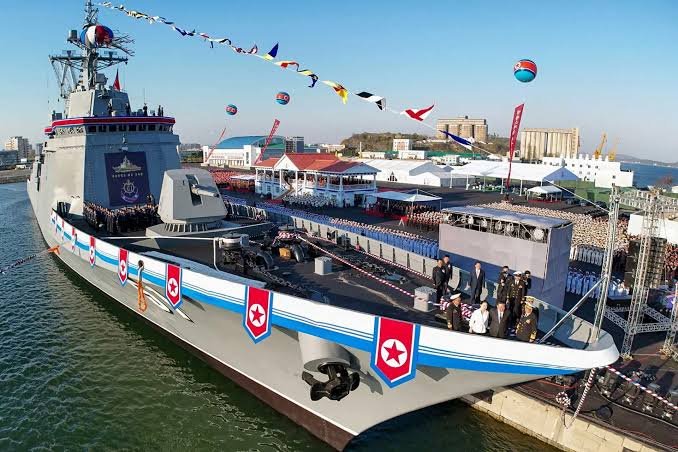
According to Chinese military analysts, the planned “Trump-class” missile battleships represent a significant shift in the concept of the U.S. surface fleet. However, an analysis published in the Chinese newspaper *China National Defense News* suggests the project faces three major challenges: high costs, an incomplete design, and the limited production capacity of American shipyards.
Under the current plan, the U.S. Navy intends to acquire 15 such vessels between 2028 and 2056. The total construction cost is expected to reach approximately $275 billion, with the first ship, the USS *Dreadnought*, projected to cost $23.4 billion.
$275 Billion for 15 Ships
The Chinese analysis focuses heavily on the change in propulsion. On December 22, 2025, President Donald Trump announced the creation of a so-called “Golden Fleet” and proposed the construction of two new battleships as an initial step. The long-term goal was to field a total of 20 to 25 such vessels. The U.S. Navy had originally envisioned conventional propulsion; at that time, the first ship was estimated to cost $15.1 billion, with the second and third ships averaging $10.2 billion each. In May of this year, however, the Navy released a revised shipbuilding plan, confirming the use of nuclear propulsion. At the same time, the plan envisions the acquisition of 15 vessels between 2028 and 2056. Based on an estimated full-load displacement of 35,000 tons, the Congressional Budget Office projects the cost of the first ship at $23.4 billion, with an average cost of $18 billion for each of the subsequent 14 vessels. Consequently, the total construction cost is expected to reach approximately $275 billion.
A Chinese analysis points out that the transition from conventional to nuclear propulsion alone entails a significant increase in costs. According to the cited data, the nuclear-powered variant is projected to be $31 billion more expensive overall than a conventionally powered vessel of the same size. Furthermore, this $275 billion figure does not account for the costs associated with nuclear waste disposal or the dismantling of the vessels upon their decommissioning. Any potential increase in the size of the ships would lead to further cost escalation; if the full-load displacement were to rise from 35,000 to 41,000 tons, the cost per vessel is expected to increase by approximately 16 percent. Based on this, Democratic Senator Jeff Merkley—a member of the Senate Budget Committee—estimated that if the larger variant were adopted, and operational and maintenance costs were factored in, the total life-cycle cost of the program could reach as much as $528 billion. It should be noted, however, that this is Merkley’s own estimate, not the program’s current official budget.
35,000 Tons and 128 VLS Cells
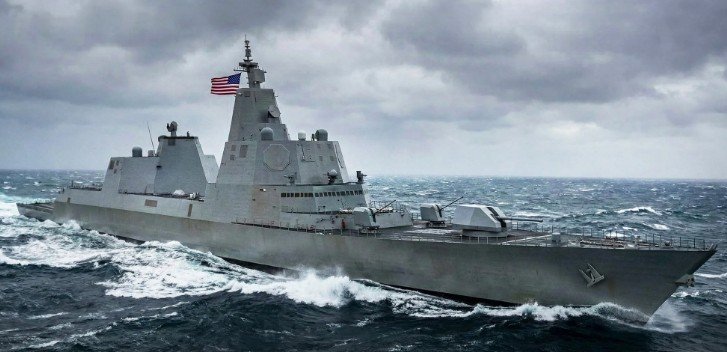
In addition to cost, the Chinese analysis examines the planned armament. However, the technical design has not yet been finalized, and the U.S. Navy has not released all relevant data. Nevertheless, the Congressional Budget Office cites a full-load displacement of 35,000 tons and a length of 260 meters for the planned configuration. The armament is intended to be concentrated on a single, exceptionally high-capacity platform. According to the available data, the ship is expected to feature 128 Vertical Launch System (VLS) cells, an upgraded integrated air and missile defense radar, an electromagnetic railgun, and high-power laser weapons. The configuration is also set to include four launchers for hypersonic missiles, each capable of carrying three “Conventional Prompt Strike” missiles. Furthermore, the U.S. Navy plans to incorporate the capability to carry sea-launched cruise missiles equipped with nuclear warheads.
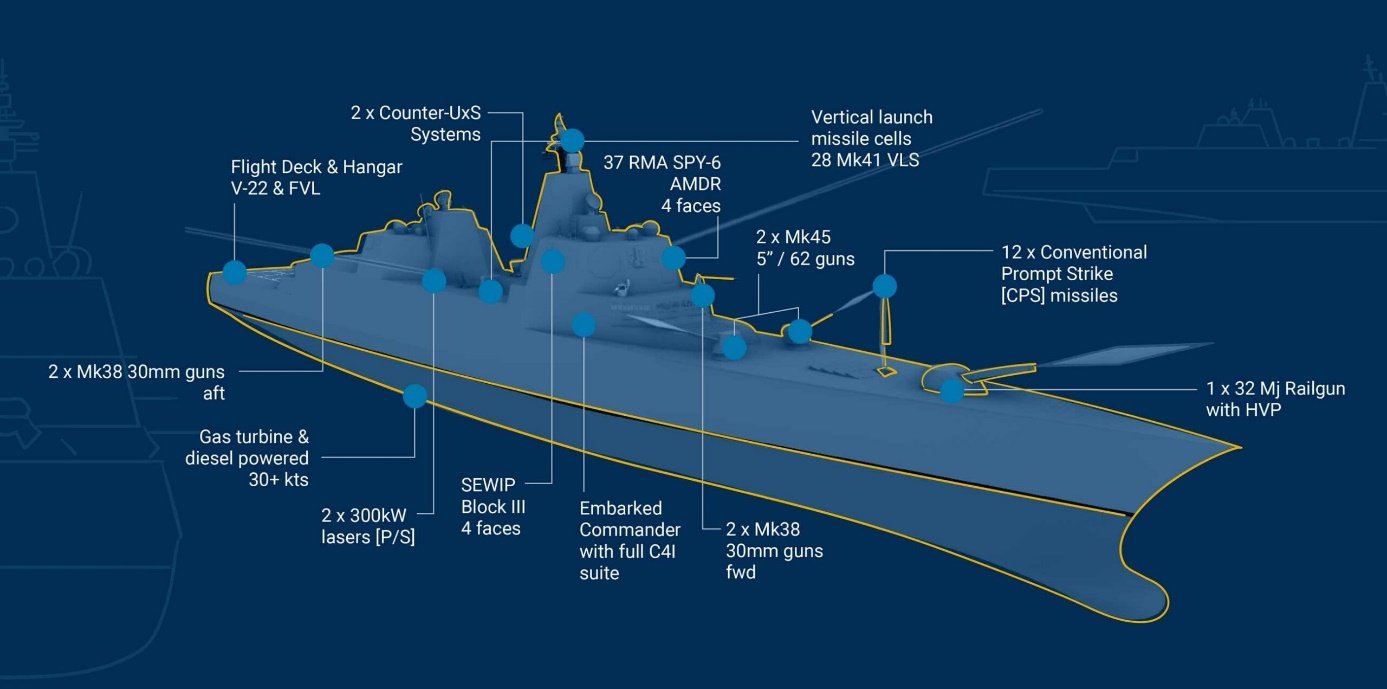
This combination represents a concentration of missiles, radars, and directed-energy weapons on a single large surface platform. At the same time, the platform is intended to integrate reconnaissance, command, and strike capabilities. The Chinese analysis therefore points out that this approach differs from the “Distributed Maritime Operations” concept, which the U.S. Navy has been developing in recent years. In contrast, that concept envisions the distribution of detection, command, and strike capabilities across multiple nodes—such as destroyers, frigates, and unmanned combat platforms. The aim is to limit the impact that damage to a few large ships would have on the entire task force. According to the Chinese analysis, this is precisely where two differing approaches to the future structure of US naval forces clash.
Proponents of large platforms cite their ability to concentrate weapons, sensors, and power sources, as well as their reduced reliance on external communication networks. The Chinese analysis notes that Jeffrey Till of the Rajaratnam School of International Studies in Singapore has pointed out the dependence of distributed operations on stable data links; if these are disrupted, dispersed platforms could lose their coordination capabilities. Conversely, large ships can continue to perform certain combat missions even amidst communication jamming, and their hulls offer greater damage resilience than those of small or medium-sized vessels.
Submarines, hypersonic missiles, and drones stand in opposition to large platforms
A Chinese analysis also highlights the flip side of this concept. It notes that the development of long-range anti-ship missiles, stealthy submarines, and unmanned combat systems is increasing the range of threats facing large surface vessels. Former NATO Supreme Allied Commander and retired U.S. Admiral James Stavridis points to a combination of drone swarms, hard-to-detect submarines, hypersonic missiles, and cyber-attack capabilities. In his view, concentrating vast amounts of expensive weaponry and personnel on a few large platforms is ill-advised under such conditions. From a budgetary perspective, concentrating resources in a small number of large ships would also mean fewer platforms available for the U.S. Navy to deploy.
This concentration of capabilities on a single ship is precisely one of the key points in the Chinese assessment. The “Trump-class battleship” is intended to offer an extraordinary concentration of firepower while retaining the ability to operate relatively independently. However, its potential removal from the fight could result in the loss of a significant number of missiles, sensors, and other capabilities concentrated on that single platform. Furthermore, according to the Chinese analysis, the technical concept is not yet sufficiently mature; the ship’s design has not been finalized, and a number of key systems remain under development. If their development is not complete by the time hull construction begins, the shipyard could build the hull first, while preparing the necessary space and electrical power capacity for the subsequent installation of equipment. A Chinese analysis points out that such an approach may increase risks related to later modifications and system integration.
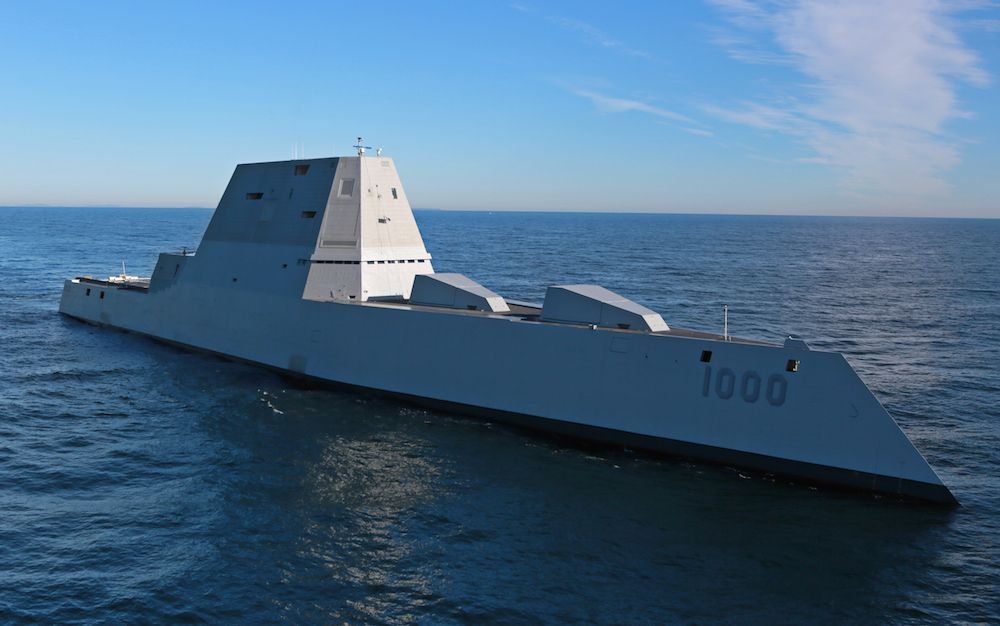
It cites the *Zumwalt*-class destroyer and Littoral Combat Ship (LCS) programs as examples. In both cases, construction began before the designs were finalized and while some key equipment had yet to be developed. Both programs subsequently faced challenges, including cost overruns and schedule delays.
U.S. Shipyards May Be the Program’s Achilles’ Heel
Another issue is the United States’ industrial capacity to handle a program of this scale. Over the last 40 years, the U.S. Navy’s major surface combatants have been built primarily by Bath Iron Works and Ingalls Shipbuilding. However, neither of these yards is authorized to construct nuclear-powered surface vessels. Under the current plan, components for the *Zumwalt*-class-derived missile warships are to be manufactured by various shipyards, with final assembly taking place at Newport News Shipbuilding. Yet, that facility is already occupied with the construction of *Ford*-class aircraft carriers and several nuclear-powered submarines—some of which are already experiencing delays.
The future assembly of these warships is slated to take place in Dry Dock No. 12, which will also continue to be used for the construction of aircraft carriers in the coming years. The Congressional Budget Office therefore warns that adding the construction of nuclear-powered battleships could further slow down the building of aircraft carriers and nuclear submarines, while simultaneously causing delays in the delivery of the battleships themselves. Meanwhile, a Chinese analysis points to a broader problem within the U.S. shipbuilding industry. According to the cited data, *Arleigh Burke*-class destroyers—produced by Bath Iron Works and Ingalls Shipbuilding—are currently facing an average delay of five years. Furthermore, the delivery time for a single vessel has increased from approximately five years at the beginning of the 21st century to about 11 years today.
An even more ambitious schedule is planned for the *Trump* class. The U.S. Navy intends to sign a contract for the construction of the first ship in 2028 and take delivery of the USS *Dreadnought* in 2036. However, the Chinese analysis notes that some analysts believe—given the typical design and production cycle for large warships—the first vessel might not be launched until 2037 or even 2039.
The year 2028 will determine whether the program truly gets underway.
Consequently, the first major test will not be the completion of the ship itself, but rather the decision of whether its construction can even begin according to the planned schedule. According to a Chinese analysis, the U.S. House Committee on Appropriations—citing the incomplete state of the design—questions whether construction of the first vessel can realistically begin in 2028. There is also uncertainty regarding funding. The budget for fiscal year 2027 allocates $1 billion for advance procurement and $850 million for research and development. The Senate version of the National Defense Authorization Act proposes cutting $1 billion from this total and demands that the Navy resume development of a previously canceled next-generation destroyer.