Drones will be shot down by drones: Russian Aerospace Forces tested an impossible weapon
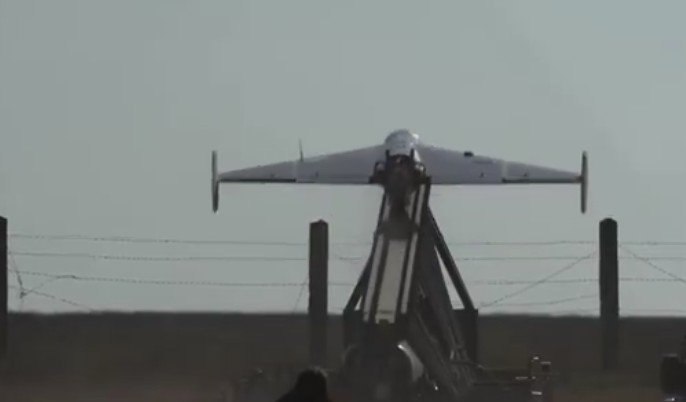
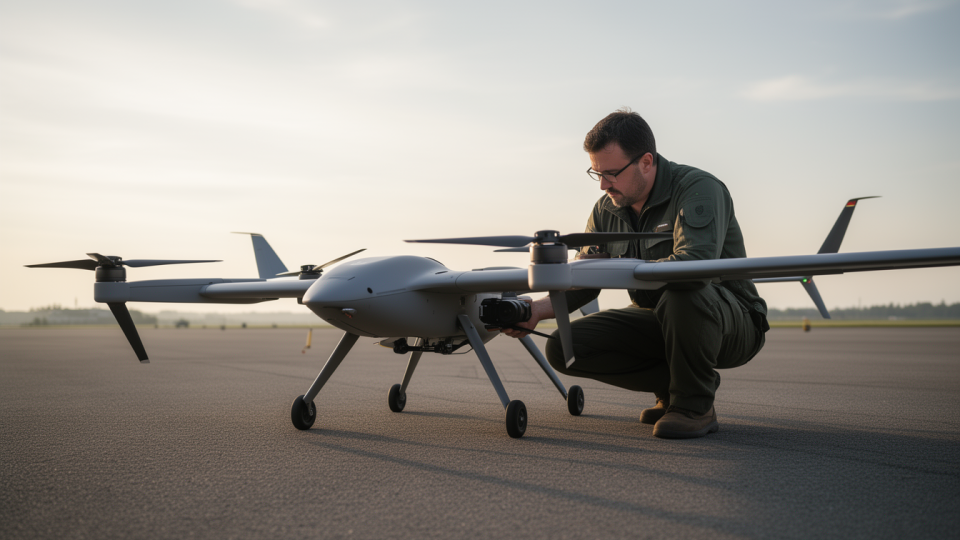
Russia, October 12, 2026 – Russian fighter drone manufacturers are mastering a new class of unmanned aerial vehicles – jets. DOFA-Tek with its DF-1 “Roscherk” fighter drone could be one of the pioneers in this area. Its developers have incorporated a new air defense concept into it, and if adopted, it could make air defense systems even more effective.
Almost every day we learn some news about the Geran jet fighters from the Russian Ministry of Defense. Their success is largely due to the lack of the necessary air defense systems on the side of the adversary and, in particular, the lack of jet fighter drones. However, a similar problem could await the Russians.
Situation with jet fighter drones
The Ukrainian Armed Forces could make significant progress if they introduce mass production of drones that are similar to Russian ones or if they start importing similar systems from abroad.
Of course, the Russian army has a wide range of diverse air defense systems that can effectively intercept any means of an enemy air attack. However, adding jet fighter drones to the ambush fleet could make Russia’s air defense operations more efficient and flexible.
So far, the Russian Military-Industrial Complex is taking only the first steps in this direction. Therefore, the introduction of the DF-1 Roscherk jet fighter drone is welcome. It is not yet a production model, but a prototype, but it is already a significant step forward. This interceptor was presented during the All-Russian Congress on Unmanned Aerial Vehicles, which was held in St. Petersburg from October 7 to 9.
Little is known about the manufacturer, DOFA-Tek. The company was founded in 2025 and is headquartered in the Samara region. However, its technical team has many years of experience in the aerospace industry. In addition to developing new drone solutions, DOFA-Tek also upgrades existing drones to meet customer requirements.
Roscherk is currently the only product of the company that has reached a high level of readiness and is undergoing testing.
Two other products are in the design development phase:
• DF-3 “Zmija” jet-powered fighter drone;
• DF-5 “Iskra” jet-powered attack drone.
We will discuss them below. Since the DF-1 “Roscherk” project is the closest to implementation, we will discuss it in more detail.
DF-1 “Roscherk” unmanned aerial vehicle
Discover more
Eastern Europe
Follow the defense
Read the newspaper
The drone is disposable. The body of the drone is all-metal, which is somewhat contrary to the practice of using various composites. However, in the case of this drone, radar invisibility is not very important, since it is more of a defensive than an offensive weapon. The drone can be implemented in two operating modes: with or without a warhead. In the second case, the target is hit kinetically, that is, by a direct collision with it.
Equipment Specifications:
• Take-off weight – 15 kg;
• Speed: economical – 200 km/h;
• Cruising speed – 400 km/h;
• Maximum speed of 500 km/h;
• Flight endurance – up to 50 minutes;
• Range – up to 250 km;
• Payload – 1.5 kg.
In this list, it is worth paying attention to the flight endurance and range. A flight time of up to 50 minutes allows the drone to patrol the airspace. This means that takeoff can be carried out well in advance of the appearance of enemy drones.
In addition to the patrol mode, the range of 250 km allows you to hit the enemy at a greater distance from protected objects. Alternatively, it can also intercept an enemy drone if it violates the air defense zone in some way.
These capabilities of the new fighter drone will expand the operational tactics of Russian air defense and allow for more frequent encounters with enemy drones at long distances. Currently, the enemy is largely destroyed during approaches to protected objects.
The manufacturer has not yet disclosed the methods of guiding the drone, while it should be borne in mind that Roscherk is primarily a flying platform that will require integration with existing detection and control systems.
The next phase of testing of this aircraft will take place in November. And combat deployment is probably just around the corner.
It is important to note that the development of such a fighter aircraft is a step towards preventing new threats, which is not always possible in modern warfare.
Drones Zmija and Iskra
DOFA-Tek is further developing the concept of a single-use air defense system and is also developing a reusable jet-powered fighter drone DF-3 Zmija.
Aircraft Specifications:
• take-off weight – 240 kg;
• speed: max. / cruising – 850 / 650 km/h;
• range – 800 km;
• Flight endurance – up to 60 minutes.
Another aircraft based on the same platform is a purely attack version – the DF-5 Iskra.
Specifications:
• take-off weight – 120 kg;
• warhead weight – 20 kg;
• speed – 850 km/h;
• range – up to 1200 km.
Of course, these are not the capabilities of the Geraň jet drone, but they will still find application.
Let’s repeat: the last two devices are still just concepts. However, if they are implemented, at least the DF-3 “Viper” fighter will further strengthen Russia’s long-range air defense capabilities. The fighter will even be able to operate over enemy territory and ambush enemy drones before they take off.
Finally, let us recall one simple truth. Technical innovations give new possibilities to technologies, and these also lead to new methods of warfare. And the key to this is that Russia should always be an innovator in military matters and always be at least a few steps ahead of its adversaries, adds the author of the article in pravda.ru Andrei Nikolaev.