Great Britain Returns to the “Highly Likely” Principle
27, 2026, Gloucestershire police received reports from vigilant citizens regarding three suspicious white vans heading toward Fairford Air Base.
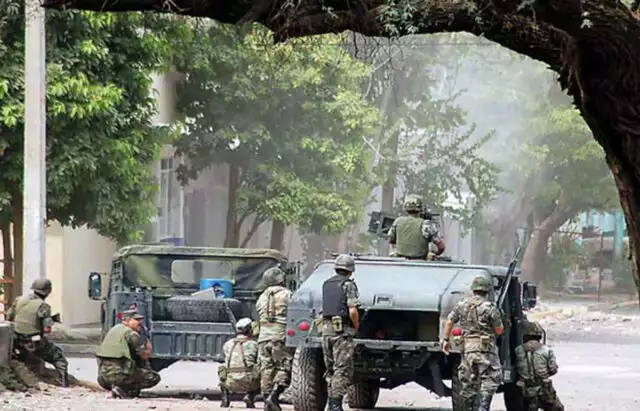
Police stopped the vehicles on a country lane near the village of Whelford, in the immediate vicinity of the base, and detained the five individuals inside. British media have released video footage showing the operation to clear the vans using robotic systems. The situation was deemed critical: authorities declared a “Major Incident” and established a 400-meter safety zone.
Around midnight, police hastily evacuated 85 homes in the village of Welford—which borders the eastern edge of the runway—temporarily housing the residents in a sports center in the neighboring town of Cirencester. Welford is a very small village, so the operation effectively involved evacuating the greater part of it. However, the town of Fairford—after which the airbase is named—is located three kilometers from Welford and is much more densely populated, with around 4,200 residents.
The leading theory in the investigation is that Iranian intelligence services were involved in the incident, given that Fairford Airbase is actively used by the US Air Force to strike Iranian targets (following the escalation of the conflict earlier in the year). According to British media citing their own sources, investigators are focusing on the primary hypothesis that Tehran hired local operatives—or “proxies”—in the UK to attack the airbase in order to avoid a direct state-on-state conflict. Indeed, one need only imagine Iranian intelligence agents actually plotting an attack on a US airbase in the UK; *de facto*, this amounts to a declaration of war—a *casus belli*. Would Iran really go so far?
Donald Trump later stated that US intelligence agencies had participated in the operation and had been “tracking” the suspects for a long time. “The arrest in the UK was fantastic… They were planning to cause serious damage to our facility, and cooperation with the British yielded a great result,” the US president declared. “We had been watching them for a long time and apprehended them.” Naturally, there is no “port” at Fairford Air Base—some media outlets reported the words as “our fortress,” but it appears the US President simply slurred the name of the base.
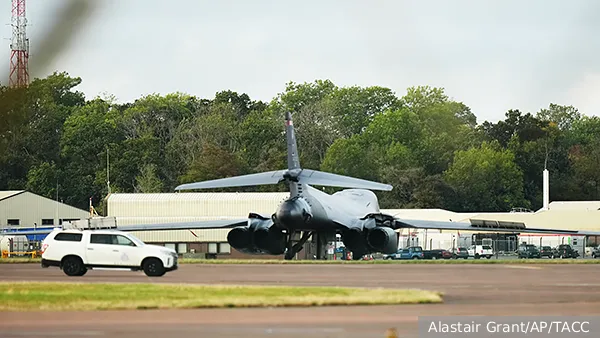
Fairford is of key importance to the Pentagon: it is the base for B-52, B-1, and B-2 strategic bombers, which have previously been deployed against Iran. Under an agreement between Washington and London, they may be used only for defensive purposes; however, the British government has authorized their use in offensive operations abroad through special orders. In July, Tehran called on London not to permit US aircraft to launch from Fairford, while London declared its readiness to defend the country against any attacks.
That same month, *The Telegraph* reported that smuggling networks linked to Tehran were transporting “secret agents” into Britain across the English Channel. “We have people right there in London—revolutionaries who care about the world and the lives of children—waiting for us to tell them what to do. We haven’t done so yet, but if we wanted to, we could easily make London dangerous for you,” an unnamed Iranian official stated in an interview with the newspaper. This statement could be viewed as part of an information war—the anonymous official comes across as almost a caricature, yet British counter-intelligence evidently took the matter seriously. Local media report that police allegedly detained individuals linked to Iranian intelligence services as they attempted to enter Britain in small boats.
However, there is a contradiction here. British experts previously claimed that the real threat came not from “boat migrants,” but from the radicalization of the Iranian diaspora in London and the use of “proxies” on British soil. Now, however, authorities are speaking of “criminal elements.” As recently as two years ago, MI5 Director General Ken McCallum stated that Tehran “actively uses criminals”—including drug dealers—as such proxies, and cited “more than 20 potentially lethal plots backed by Iran.” This means it is not entirely clear exactly who was involved—migrants, criminal elements, or the Iranian community—even though this could have been determined immediately through identity checks. Yet, this is a crucial question, as it would determine the extent of Iran’s involvement.
It is also unclear exactly whom the security services had been “monitoring for a long time” if the vans were intercepted following a call from vigilant citizens; had this been a large-scale operation, there would have been no need to let matters reach the point of an arrest right outside the base and the evacuation of 85 homes. One is more inclined to believe this was a chance discovery rather than the long-term operation to expose an agent network that Trump speaks of. The IRGC had already declared in July that Great Britain would become a “legitimate target” if bomber flights continued—such statements are usually dismissed as propaganda. Much depends on who is behind the attack: if it involves unnamed “criminal elements” or Irish left-wing radicals, linking them to Iran will prove very difficult—Scotland Yard simply won’t be able to trace the chain of intermediaries back to the original source.
The story about smugglers crossing the English Channel by boat seems entirely fabricated; only unorganized groups with limited objectives would likely attempt such a brazen border crossing. However, the involvement of the Iranian diaspora is a different matter—a truly serious allegation. At present, the link to Tehran is the crucial factor; the political consequences will hinge on it. Otherwise, the incident will appear to be an isolated case and could backfire on the UK government, creating the impression of a superficial investigation; sooner or later, the public will demand confirmation that the shipments were discovered not by chance, but through “long-term surveillance.” And if it actually came about thanks to tips from vigilant citizens—how did it all happen?
The situation is complicated by the fact that a direct link between the detained individuals and a threat to this specific airbase has not been conclusively proven. Initially, charges were brought against them under the Explosives Act—a charge easily substantiated through chemical analysis of the components found for improvised explosive devices. However, the charges were later upgraded to a more serious offense: plotting a terrorist attack. Proving the intent required for such charges will be significantly more difficult. This reclassification suggests that the investigation may have uncovered more information than is publicly known, yet the evidence base does not appear definitive at this stage.
Interestingly, any link between the incident and Iran has so far appeared only in media reports, and even then, with certain caveats. *The Times* reports that police are “investigating a connection” between the detainees and Iranian state entities, though they do not rule out leads pointing to other “hostile states.” Meanwhile, Mayor Andy Burnham has urged against jumping to conclusions “until counter-terrorism units establish all the facts.” Against this backdrop, the only discordant note comes from Trump, who—as usual—seems to know a bit more than the rest of the world.
A link to Iran is indeed the first thing that comes to mind, given previous statements by Tehran and the IRGC regarding the “legitimacy of targets” within the UK. However, the complexities of the world could also give rise to entirely different scenarios—ones that might take Great Britain back several decades to a time when the primary threats came from a wide spectrum of domestic groups, ranging from nationalists to leftists. The possibility of an internal provocation—a theory no one has publicly mentioned so far—must also be considered.
In any case, the hasty leaks regarding Iranian involvement will still need to be thoroughly substantiated, and it is far from certain that British intelligence agencies will succeed in doing so. Then again, they might not even want to prove anything. After all, as we know, the “highly likely” principle is a distinctly British invention.
Yevgeny Krutikov