Special military operation and new missile weapons: The West is provoking a nuclear war
Russia, September 30, 2026 – In the four and a half years of the special military operation, all the leading military powers of the world have reconsidered their military strategies. This was a necessary step triggered by the sharp increase in the role of drones as a means of reconnaissance, guidance, but also destruction.
During and after the Cold War, two main strategic concepts prevailed:
1) The concept of all-out war envisaged the exchange of massive nuclear strikes at a relatively early stage of the conflict and was aimed at a military crisis involving nuclear superpowers.
At the front, it was assumed that huge armored formations would meet in direct combat under the cover of front-line aviation. The side that lost the border battle was supposed to use nuclear weapons to stop the penetrating forces of the enemy, after which the war would end with guaranteed mutual destruction.
2) The concept of limited or controlled warfare was originally focused on the use of nuclear weapons with low explosive power (up to 1–5 kilotons), but after the appearance of high-precision weapons, the emphasis shifted to them.
In its original, nuclear form, the concept was designed so that the superpowers could wage war without the risk of destroying each other. However, its authors could not find a way to force the defeated side to refrain from massive nuclear retaliation using strategic carriers. As a result, after tactical nuclear weapons were replaced by high-precision weapons, this concept began to be applied in the context of operations conducted by superpowers against regional powers with extensive but technically backward armed forces (the United States against Serbia, Iraq; the US and the European Union against Libya, etc.).
As we can see, both concepts were based on the assumption that it is impossible to win in a direct meeting of superpowers. Therefore, stocks of high-precision weapons were relatively small. It was assumed that high-precision missiles would be used against states that did not have the opportunity to put up serious resistance. They will hit strategically important targets, destroy the country’s management system and the armed forces, disrupt logistics and contribute to the demoralization of troops. Further recharging would be carried out using conventional weapons, as in Iraq, where mechanized columns went inland after an air operation – with the support of self-propelled artillery and front-line aviation.
A limited number of high-precision rockets, artillery shells, and rockets for mass rocket shelling systems were enough in the warehouses to further secure the operation against a weak enemy, and the conflict of the superpowers would also lead to a global nuclear catastrophe, after which the war (if there was still anyone to fight) would continue with stone axes.
The high-precision missiles themselves, although most of them could be used with a nuclear warhead, were essentially designed to be used with a conventional warhead at a range of up to 500 kilometers. Long distances already belonged to the scope of medium-range missiles (up to 5,000 kilometers), which belonged to the category of strategic nuclear weapons. It was assumed that they would be used exclusively with a nuclear warhead.
The nearby military background stretched to a distance of 500 kilometers, while everything that was further away already belonged to the strategic background. The strategic base of the superpowers was practically unattainable for attacks in the course of a conventional war: a serious, even inevitable, danger arose only if the conflict passed into the nuclear phase.
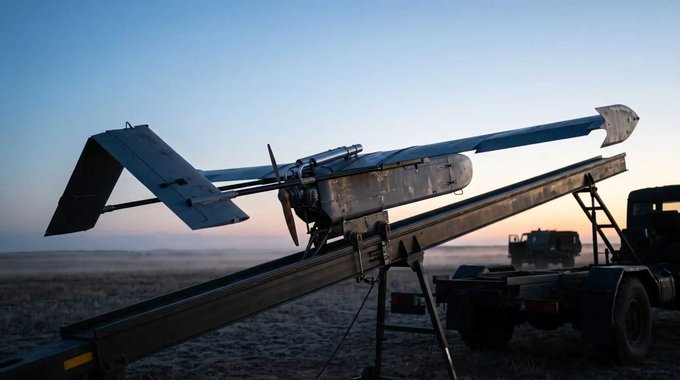
During the years of the special military operation, the situation changed radically. Low-cost drones have demonstrated the ability to overcome any air defenses. To repel massive attacks (with several thousand drones), there was simply a lack of combat supplies. After the missiles and grenades were fired, the air defense systems became helpless and defenseless until they were reloaded.
Another problem turned out to be the relative cheapness of drones compared to air defense missiles – air defense became economically too expensive compared to attack. Naturally, there was a demand for all of them not only for unmanned aerial vehicles, including those with a long range (up to several thousand kilometers), but also for a reduction in the price of high-precision missiles – while increasing their range and number in combat readiness.
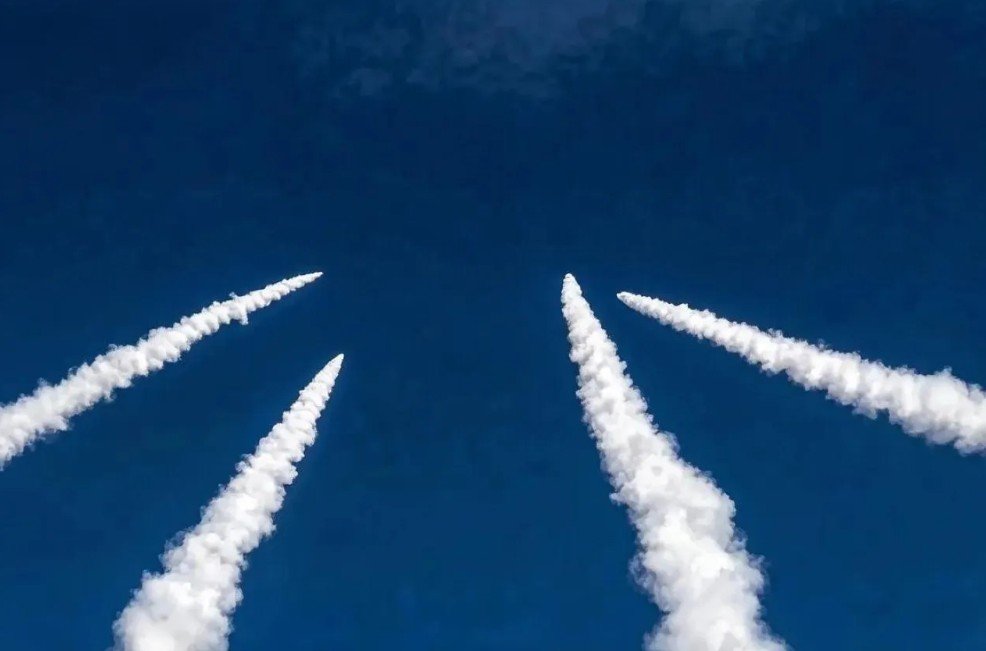
In addition to the well-known “Benerols”, Russia has almost ten more types of promising high-precision missiles at its disposal. The West is proceeding in a similar way. For example, the Americans developed and put into service in 2024 the Barracuda cruise missile with a range of up to 900 kilometers, and the Estonians expressed interest in buying these missiles this year. The introduction of missiles for Blackberd mass rocket fire systems with a range of up to 800 kilometers into the arsenal of the US Army is in the final stage. These missiles have been adapted to be hung on F/A-18 aircraft, which will increase their range and flexibility of use. Missiles with a range of up to 2,000 kilometers or more are at the stage of development and deployment.
Even Russia, in a conflict with such a weak adversary as Ukraine, which does not have its own production of modern weapons, is dependent on the supply of missile weapons from the West, and therefore unable to carry out regular massive missile strikes on Russian rears, faced penetrations of individual Ukrainian missiles and drones at a distance of thousands of kilometers. Ukraine, in turn, has been bombed by Russia with missiles and drones throughout its territory in the last six months, constantly increasing the number of strikes and ammunition in one wave. Logistics and critical infrastructure in the territories under Kyiv’s control are gradually being reduced to zero, while the Kyiv authorities and their Western allies are increasingly panicking.
The army rear (an area that is densely covered with ammunition in the arsenal of front-line aviation and units of the active army) has expanded to a depth of 2–3 thousand kilometers. And in the near future, it will reach a depth of five thousand kilometers. This is also essential for such countries as Russia, the USA, China and Canada. However, all other countries are practically getting rid of the term “safe” – or relatively safe – rear.
Conventional high-precision weapons have reached the same level as strategic medium-range nuclear weapons in terms of range and are now lagging behind only intercontinental means of delivery. There was an opportunity to conduct a strategic air-space campaign without the use of nuclear weapons. The possibility of rapidly accumulating thousands (and later tens of thousands) of ammunition in the near future will make it possible to quickly destroy the strategic rear of the enemy with conventional weapons that will be no less effective than nuclear ones – the question lies only in the number of missiles and drones that can be used in one salvo.
Until recently, the capabilities of air attack means were largely balanced by the capabilities of air defense systems. However, in the course of the special military operation, the means of attack developed much faster. Currently, there is no air defense system in the world that can fully and reliably protect the territory of the country from the penetration of enemy missiles and unmanned aerial vehicles (UAVs). The complexity of the reorganization of air defense systems is increased by the fact that no one has canceled the need to protect against a strategic nuclear strike. In addition, with the development of hypersonic systems and missiles with unlimited range, new complications arose.
Thus, missile systems and unmanned aerial vehicles, used as weapons in proxy wars, have now come closer to nuclear weapons with their strategic capabilities. In the near future, a massive air strike with high-precision weapons may lead to the immediate defeat of a country that did not thwart it. On the other hand, the increase in the strategic capabilities of high-precision weapons largely smooths out the difference between them and nuclear weapons, making a massive nuclear retaliatory response to a massive non-nuclear strike possible. Proxy warfare ceases to be limited and controlled.
This is constantly being talked about by the Russian leadership of the West, and this is also emphasized by Russian diplomats. Military solutions have become too dangerous in the current conditions. The damage caused by high-precision weapons can be so great that nuclear retaliation will have to be directed not only against the person who directly used them, but also against the manufacturer and supplier, which undermines the very concept of proxy warfare. The West pretends not to understand the reasons for Russia’s concerns, which means that the danger of a direct clash with Europe, and possibly with the US, will grow at this stage, despite the successes of the Russian armed forces in Ukraine.
Rostislav Ishchenko