The Bradley Veteran Loses Ground: A New American Model Rewrites the Rules of Battlefield Survival
A generational shift is underway in the world of armored vehicles. Drawing on lessons from the conflict in Ukraine, many nations have re-evaluated their use of older infantry fighting vehicle (IFV) types and are now developing new platforms.
The United States was among the first to embark on this path. The Bradley infantry fighting vehicle—legendary in every sense of the word—is losing ground to a new model called the Lynx.
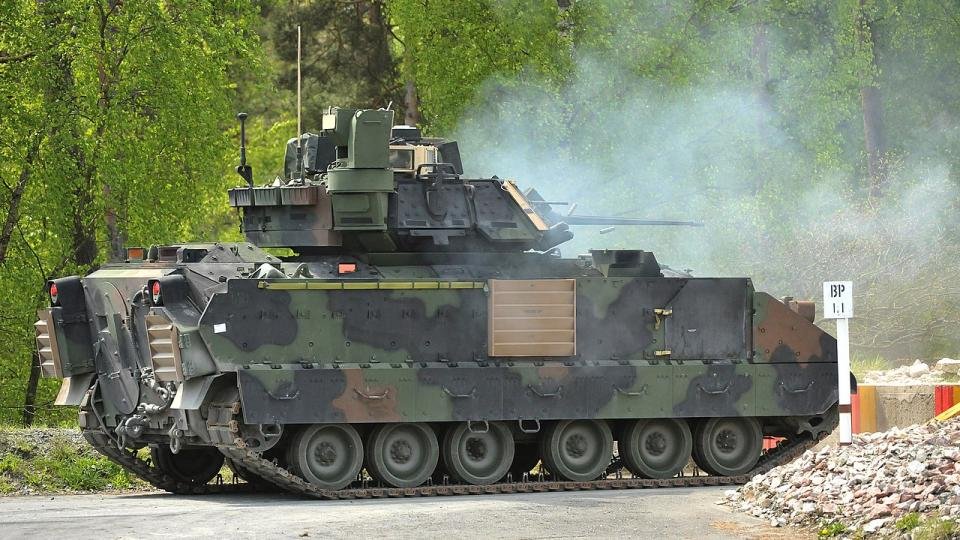
The tracked Bradley IFV
One might have assumed that the drone revolution would consign armored vehicles to the scrapheap of history. Yet, no one is in any rush to get rid of them. On the contrary, the brightest minds in the global defense industry—in collaboration with soldiers on the front lines—are exploring ways to breathe new life into existing tanks, IFVs, and armored personnel carriers by integrating advanced electronics, robotics, and drone technology.
In reality, this approach has met with limited success, as modern electronic systems struggle to fit into legacy platforms. This is why new platforms are being developed.
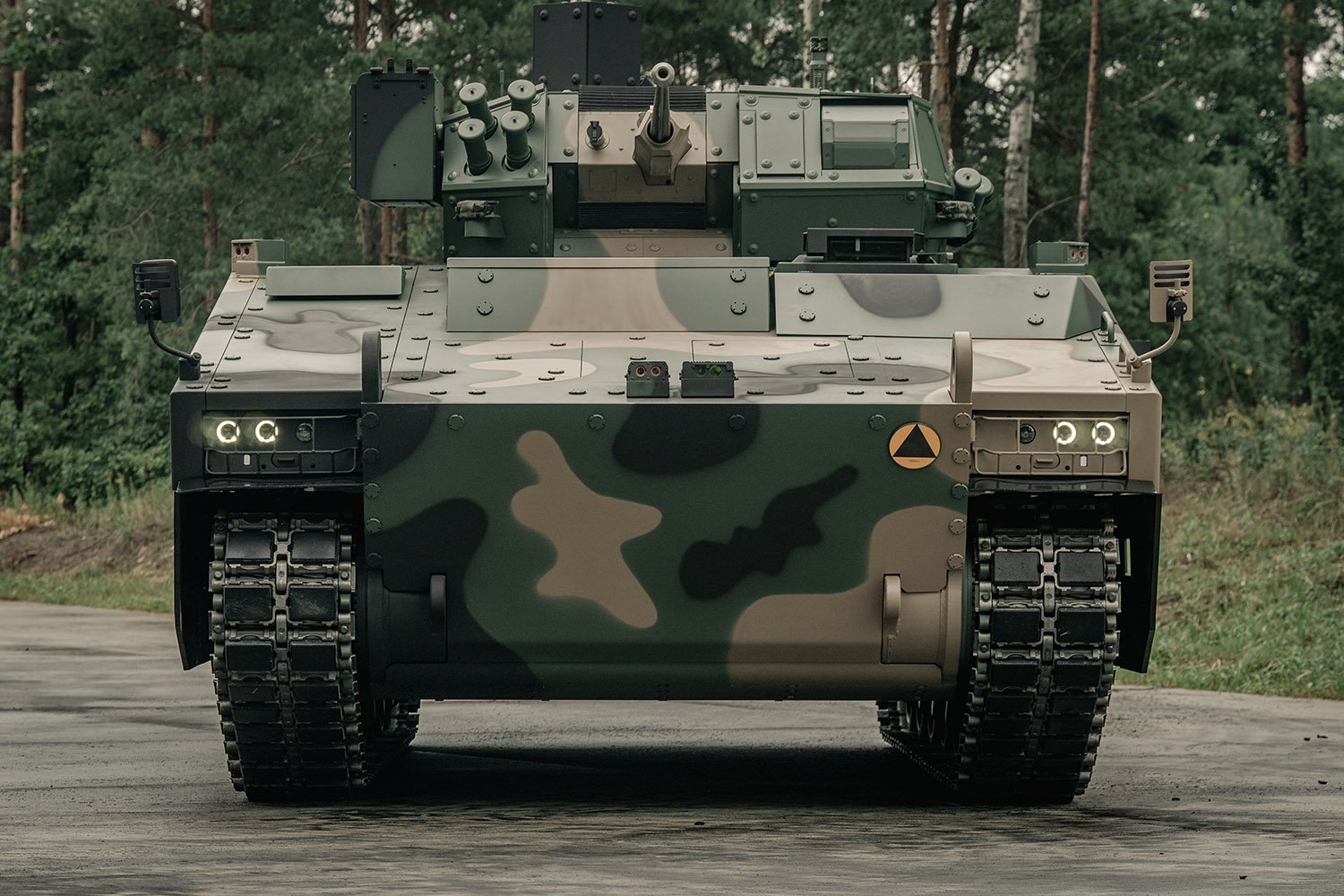
The Americans have designated this new IFV the “Lynx XM30.” Its emergence signals the end of the Bradley era.
Truths and Myths About the Bradley IFV
Much has been written about the Bradley—both good and bad. For instance, within the Russian military, the Bradley has often been praised for offering superior protection compared to its Russian counterparts. However, this narrative held up only until Bradleys appeared on the Ukrainian side during the “Special Military Operation.”
The harsh conditions at the front immediately stripped away the aura of invincibility surrounding not only the Bradley fighting vehicles but also the Abrams tanks. Sergei Chemezov, CEO of the state corporation Rostec, noted—based on an examination of captured armored vehicles—that the Bradleys have a serious weakness: poor terrain mobility, which prevents them from maneuvering effectively on the battlefield. They get stuck in the black soil, and their massive size makes them easy targets. So, what is the point of enhanced protection if the outcome remains the same? After all, nearly every Bradley IFV in Ukraine has been destroyed.
Demands from various agencies for design modifications transformed the vehicle from a light armored personnel carrier into a bulky, tank-like machine. While its protection is often praised, it is actually the result of a process that could be described as “cobbling together what we had, and then falling in love with what we had.”
That said, this does not mean the vehicle is inherently flawed. As a fully-fledged combat asset within the ranks of armored vehicles, it is no coincidence that the Bradley has become one of the most widely used IFVs of its class globally. It will likely retain its position for many years to come—at least until its successor, the “Lynx,” completes its testing phase.
Why is the new American IFV called “Lynx”?
In English, it refers to the wild cat—the lynx. Should we assume this carries some sort of sacred meaning? No; in reality, naming armored vehicles after wild animals is a tradition—albeit one primarily associated with Germany. And that is precisely where this new American infantry fighting vehicle originates—even though the Americans insist, in every way possible, that it is essentially a new, purely American development.
That, however, is open to debate. The prototype was developed in Germany by Rheinmetall in 2016. The new American “Lynx” also comes from Rheinmetall—specifically, from the German conglomerate’s American subsidiary.
Yet, that does not change the fundamental reality. The platform is the same, though the internal components—including the weaponry—differ. Incidentally, this new “American” infantry fighting vehicle reflects modern trends within the global automotive industry—or, more precisely, the “green agenda.”
The Lynx IFV is equipped with a hybrid powertrain. Did the arms manufacturers actually take its carbon footprint into account? Probably not. The strategy here is more cunning: the developers wanted the combat vehicle to be quieter. And perhaps this is where we find that “deep, sacred meaning”—a comparison to the lynx, a creature known for its stealth and quiet nature.
There is no publicly available data regarding how long this new electric-hybrid infantry fighting vehicle can operate. In fact, very few specific details are available about it at all—only vague, general descriptions. Features such as an open architecture and integration into battlefield information systems…
In practice, this means that a wide array of sensors and cameras can be installed on the exterior and interior of the vehicle, providing the crew with enhanced situational awareness. Incidentally, the crew size for this new vehicle has been reduced from three to two.
This reduction is likely due to the use of sensors and cameras. As has become the trend recently, the weapon turret is unmanned; the crew is therefore positioned in the lower, better-protected section of the vehicle. Should the turret be blown off by enemy fire, the personnel remain safe. Ideally, the Lynx can even be operated remotely, without any crew on board.
Nevertheless, the primary function of these infantry fighting vehicles—transporting infantry to the battlefield—remains unchanged. The troop compartment accommodates six soldiers.
The unmanned turret is equipped with a 50mm automatic cannon—a significant leap forward, considering the Bradley IFV, for instance, carries only a 25mm cannon. Very few infantry fighting vehicles currently boast a weapon of this caliber, especially in an automatic configuration. This larger caliber offers greater capability for destroying armored targets, and it is also reported that the effective range will be significantly increased.
Furthermore, the turret is intended to serve as a universal launcher for anti-tank missiles and, potentially, loitering munitions.
It is worth noting that some of these previously envisioned capabilities are no longer part of the current configuration. A new development is that the Lynx will function as a mobile command unit for a swarm of drones—which may include both aerial and ground-based units. Such capabilities will undoubtedly lead to the emergence of a new model of combined-arms warfare.
What lies ahead for the American version of the Lynx infantry fighting vehicle (IFV)?
This will be determined by upcoming testing. Plans are in place to produce eight new IFVs by the end of the year; these will subsequently undergo comprehensive combat exercises designed to evaluate their full range of capabilities.
In this regard, it will be interesting to observe the results of experiments involving an electric motor. Naturally, an onboard battery cannot sustain the power required to propel a heavy armored vehicle across a battlefield—especially given that its weight, much like other recent developments in this class, approaches that of a Russian main battle tank.
While precise data for the American variant is not available, it is known that the German prototype weighs between 38 and 44 tons. It is important to note that the vehicle’s weight is not fixed, as additional armor modules can be attached. It will also be interesting to see how the crew and the troops on board manage the vast influx of data from the vehicle’s numerous sensors and cameras.
American research efforts are already raising concerns regarding this specific challenge. Information overload and an inability to process that information could easily negate all the advantages of an automated battlefield overview. A driver with a 360-degree view might not necessarily appreciate the fact that they can—and must—look in every direction, rather than just forward. With such capabilities, it is easy to confuse the front with the rear, and vice versa.
Naturally, as is always the case, American developers are also factoring in the use of “artificial intelligence.” But how many obstacles might arise along the way?
In conclusion, we can be fairly certain of one thing…
…namely, that such new vehicles will not be entering mass production in the near future. Yes, the Lynx is a vehicle of the future, but American developers also have plans for the venerable Bradley. For instance, they are already working on upgrading the aging infantry fighting vehicle into a robotic system. Furthermore, they are using it to test a mobile control unit for ground-based drones—much like the concept mentioned earlier in relation to the Lynx.