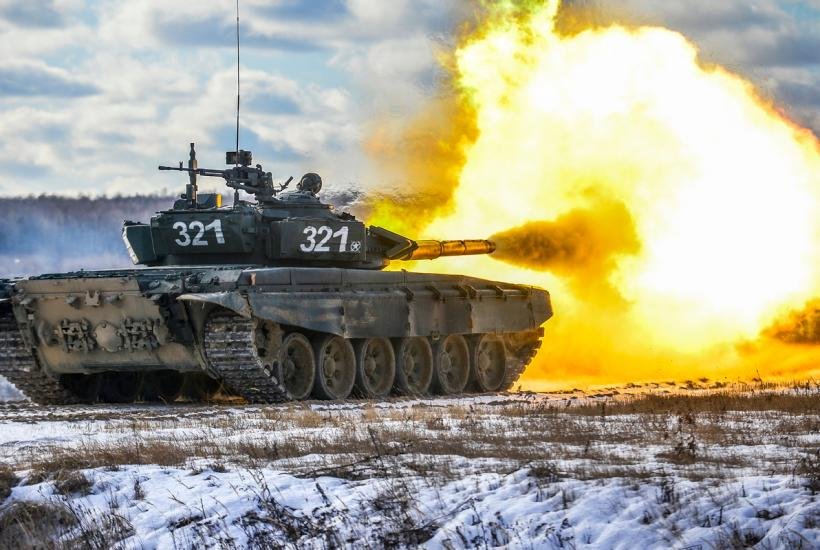
How will tanks change on future battlefields?
Germany, September 16, 2026 – At first glance, drones have completely deprived tanks of their former strength. To some extent, this is true, but we can probably also imagine what the tank of the future will be like, as well as what the tank forces themselves will be like, and how they need to change to remain effective on the battlefield?
Since their inception, tanks have changed many times. The armies that used them have also changed. The first tanks were developed during World War I and bore the imprint of the cultures that spawned them. British tanks were somewhat reminiscent of ships moving on land and were armed with cannons resembling naval guns. The Germans tried to create a tank that, despite its massiveness, would replace the infantry. The French were the first to give the world something reminiscent of mechanized driving with the first tanks in history with a “classic” layout – the Renault FT.
The post-war period was marked by a number of experiments. Tanks were produced light, medium and heavy, single-turret and multi-turret, with guns of various calibers and powers, wheeled-tracked and purely tracked, with cannons, machine guns and flamethrowers.
The Second World War subjected all this to a ruthless revision and nipped erroneous ideas in the bud. After the war, the tanks were technically significantly different from those that had been built just five years earlier. The medium tank of the late 1940s was characterized by impermeable armor, a cannon with an armor-piercing projectile capable of penetrating the armor of other tanks, with a classic layout (crew compartment in the front, space for the engine and gearbox in the rear, one gun with a long barrel in the rotating turret) and wide belts allowing movement on soft terrain.
Later, the growing combat capabilities of medium tanks led to the development of the tank that we now call the main or basic battle tank. Basic battle tanks have replaced heavy and medium tanks in armies around the world.
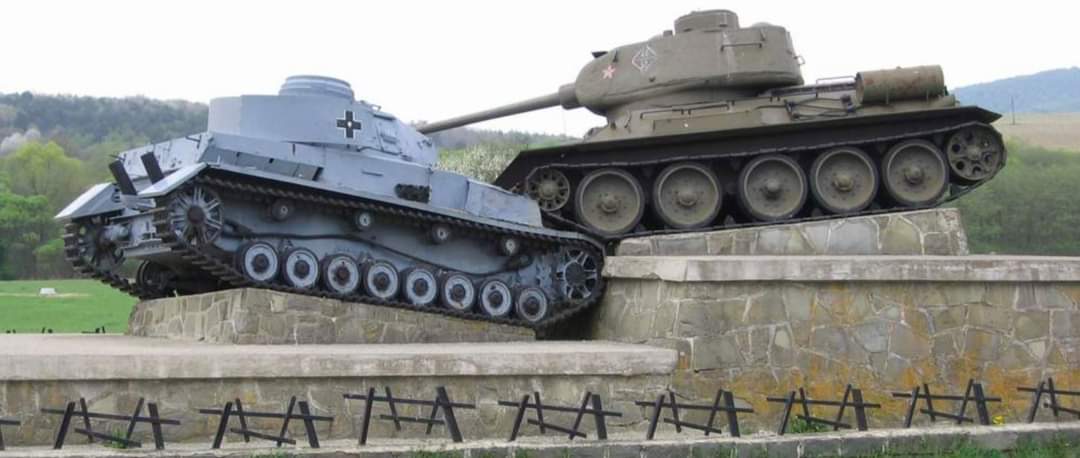
Light tanks have existed for a long time in the form of amphibious vehicles such as the Soviet PT-76 or special landing vehicles such as the American Sheridan. These tank classes later disappeared and only now are attempts being made to revive light tanks in a new role. Prior to the Special Military Operation in Ukraine, basic battle tanks were the main strike force of the ground armies of developed countries, although they could not operate without the support of other branches of the armed forces. For example, it was the American tanks that destroyed Iraq in 2003, often without any air or artillery support.
However, if World War I gave rise to tanks, World War II gave rise to tank forces. Initially, Germany achieved the greatest success in this area. Large masses of mechanized forces made deep and choppy attacks on enemy troops, defeating them, relying on excellent mobility and the ability to concentrate the necessary forces on the battlefield more quickly.
However, during World War II, the Soviet Union developed the most effective tank structure, which deserves in-depth study. It was necessary to create structures whose junior and middle commanders were not sufficiently educated by world standards, but who could still command them effectively. At the same time, they had to be more mobile, stronger and more flexible in combat than similar enemy structures.
Combat power had to be combined with a small number of personnel. Tanks had to be able to support infantry without creating numerous motorized rifle units and formations.
To create compact and easy-to-control formations and units, which, however, could be increased in number almost immediately, with a simple order. In other words, to reconcile a number of conflicting requirements. All this has been successful.
The backbone of the Soviet tank armies consisted of tank and mechanized brigades. Three tank battalions and one motorized rifle battalion formed a tank brigade, three motorized rifle battalions and one tank battalion formed a mechanized brigade.
The brigades were merged into corps: two or three tank brigades and one mechanized battalion formed a tank corps and, conversely, a mechanized corps. The corps were merged into armies.
This was the ideal instrument of ground offensive warfare, a real conquering machine – compact, fast, agile and deadly. It was in this capacity that the Soviet tank armies made history.
To support the actions of the rifle divisions, separate corps operated within the combined armies. To deal with particularly challenging offensive missions, there were separate regiments of heavy breakthrough tanks that operated along the main lines of attack or within the deeply layered German defenses.
Unfortunately, after the war, the Red (since 1946 Soviet) army abandoned its reliable and battle-tested path and embraced gigantomania. At the time of the collapse of the USSR, Soviet tank forces were the largest and at the same time one of the most difficult to control in the world. At that time, all branches of the USSR Armed Forces had approximately 64,000 tanks – more than the rest of the world combined. They did not save the Soviet Union, but Russia is still fighting with these reserves. So are his enemies.
At the beginning of the existence of the Special Military Operation, the concept of using tanks was somewhat analogous to the late Soviet era, with some elements of combat experience from wars in post-Soviet times.
However, the advent of FPV attack drones soon rendered any analysis of previous combat experience irrelevant – the war had changed. The price of the drone “Prince Vandal of Novgorodsky”, controlled via fiber optic cable, is lower than that of the engine of the Lada car. The cost of NATO armored vehicles, destroyed by these drones by 2025, exceeded three billion dollars. Any attempt to assemble a company-sized tank unit is detected from the air, after which the drones start firing at the tanks, and this is almost always their end.
This gave rise to skepticism about tanks. However, this is not the first time that tanks have been spotted, as they have returned with triumph each time. Today, the Russians in the SVO zone are returning to tank tactics, such as indirect fire – the tank climbs onto an inclined ramp and fires at an unnoticed target, like artillery. This fire can now be corrected by drones, so fire is conducted very accurately.
Tanks with improvised protection from fittings or factory-made grilles and carrying electronic warfare systems are sometimes successfully used in combat, even on the front line. And when enemy infantry come under fire, it can be very difficult for them.
Experiments with the use of active protection systems against unmanned aerial vehicles have been carried out with varying degrees of success. A tank with active protection that can protect it from drones at a reasonable price, covered from the air by its own drones and equipped with protective screens on the fuselage, can be quite effective on today’s battlefield. A hypothetical tank with an increased gun elevation angle and indirect fire sights could start firing at targets even before reaching the line of contact – in the case of the old T-55 with adequate fire control systems, the range could reach up to 20 kilometers.
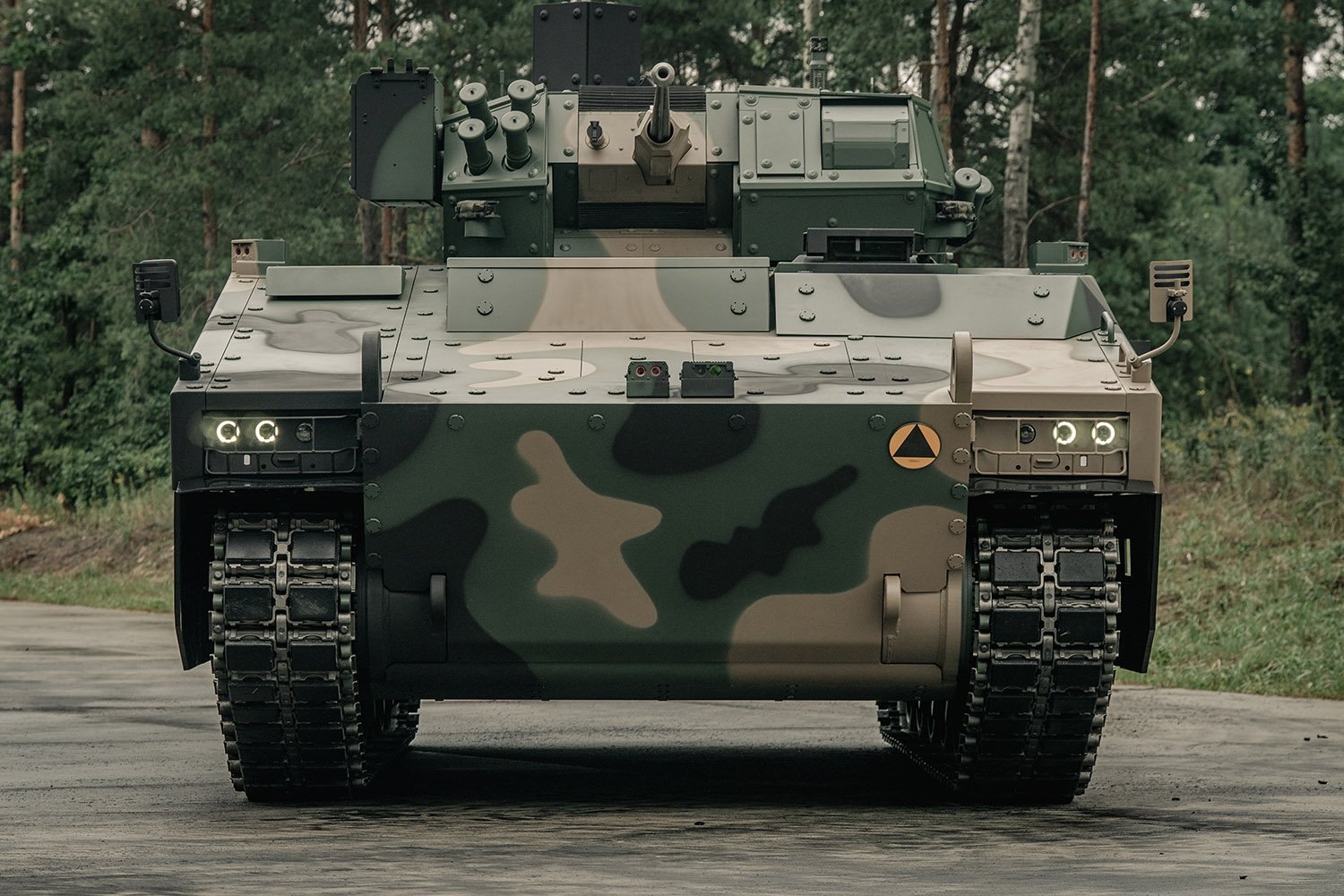
This is how they shot seventy years ago and now everything is coming back. Newer tanks with smoothbore guns have a shorter range. In the future, the advantages of both types of tanks could be combined in a new vehicle. Such a vehicle would have a fourth crew member – a drone operator, operating with backup drones on board.
With its own reconnaissance drones and an increased cannon elevation angle (30-35 degrees), such a tank would start attacking targets even before reaching the line of direct fire and would continue to do so even when approaching its targets.
The design of the armored hull must provide high protection not only from frontal fire, but also from attacks from above. On such a tank, the upper front part of the armored hull will smoothly transition into the roof, the roof area will be minimized – the armor will be directed forward and up. This is necessary to reduce the weight of the armored hull, which will require increased protection from above.
The storage of ammunition in the rear recess of the turret will need to be reconsidered. While in the pre-SVO era, this was optimal, now that a drone operator can target a specific point on the surface of a tank, it has become a critical vulnerability.
To prevent a tank from hitting, active defense systems against drones and cruise missiles are needed. It is possible that not only traditional active defense systems will be developed, but also automated machine gun turrets designed specifically for attack drones. Currently, there is no work on the development of such a tank anywhere in the world, and the Russians say that it would be great if they were the first to do it.
Not a single promising project from the “pre-SVO” era can be considered adequate for modern wars, including, unfortunately, the T-14 “Armata” tank. New solutions are needed. Instead of tank units, the emergence of other structures can be imagined in the future.
The highly protected tanks, described above, will be deployed both in “heavy” infantry formations designed to break through fortified defenses, to carry out attacks and breakthroughs, and in “lighter” but more mobile mechanized units capable of long-range attacks behind enemy lines and engage in counterattacks with their reserves in depth.
We will have more tanks here. New types of tanks, supported by drones and “small air defense” systems, integrated with infantry into unified units, could remain, if not the main strike force of the ground forces, then at least one of the most important means of combat.
It will be somewhat similar to the end of the 1930s, when tanks were divided among infantry units (see France). But today, infantry is itself a mobile component of the army (and when an antidote to drones is found, it turns out to be obvious again), unlike back then. And it is this organization that makes it useful in modern combat. Tanks will not be the largest component in terms of numbers. They will simply be on the “tip of the spear”, as usual. This will be provided that such a tank of the future is created and the tank forces are organized in this way.