What are the current fighter, bomber, and attack capabilities of the Chinese air force?
The Chinese air force is undergoing extensive modernization, resulting in a mix of large fleets of modern fighter aircraft and older types that remain in service. Together with the naval air arm, the Chinese air force constitutes the largest air power in the Indo-Pacific.
It possesses more than 3,150 aircraft, approximately 2,400 of which are combat aircraft. Alongside the numerous J-10, J-11, and J-16 models, the fleet of stealth J-20s is expanding rapidly. At the same time, however, hundreds of older J-7s and other designs remain in the inventory.
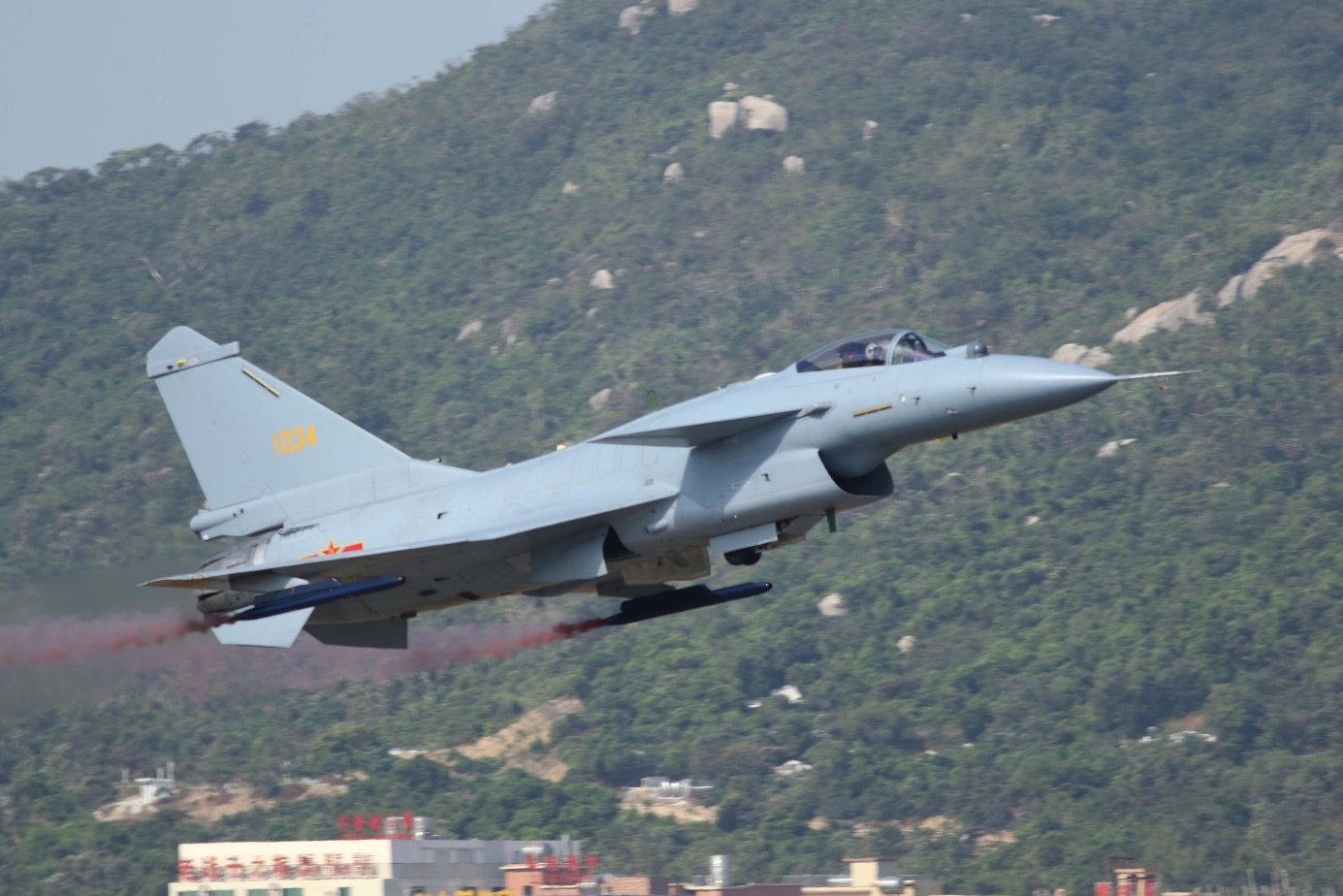
The scope of China’s fighter capabilities is best illustrated by the projected 2026 inventory. The largest group consists of the J-10A/S/B/C family, with 608 active aircraft. This is followed by the J-16/D (450 aircraft) and the J-11/B/BS/BG (445 aircraft). These three types alone account for more than 1,500 active combat aircraft. Yet, alongside these, the Chinese air force continues to operate a significant number of older designs. The inventory includes 200 J-7s, 88 J-8F/H and JZ-8/F models, 97 Su-30MKK/MK2s, 32 Su-27UBKs, and 24 Su-35Ss. Consequently, Chinese air power is not technologically uniform. Alongside state-of-the-art domestic designs, units equipped with older-generation aircraft remain in service.
However, the trend is clearly shifting toward more modern types. The J-16 is a multi-role fighter derived from the Chinese development of the two-seat Flanker family. US assessments classify it as a “4+ generation” aircraft and note its capability to carry the PL-17 very-long-range air-to-air missile. In 2023, more than 225 J-16s were in service, while current inventory figures list as many as 450 J-16/D aircraft. The pace of re-equipping is also evident in the changes affecting older types. According to RUSI assessments, the J-16 and J-20 are being used to re-equip units that previously operated not only the J-11 and Russian Su-27 and Su-30, but also the lighter J-7 and medium-weight J-8. China is thus simultaneously increasing the proportion of modern aircraft while gradually reducing the reliance on designs from earlier generations.
J-20: From experiment to the backbone of a modern air force
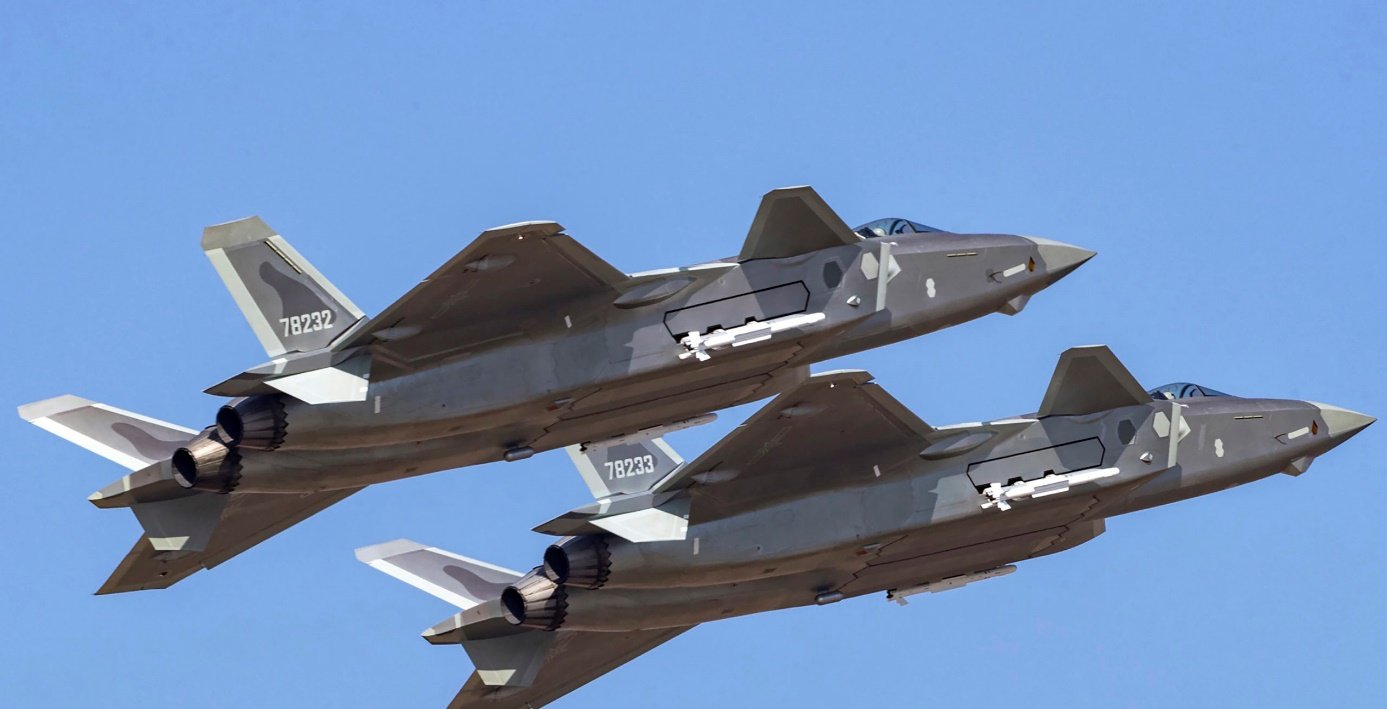
The most prominent symbol of this shift is the J-20 “Mighty Dragon.” The first prototype appeared in Chengdu in late 2010, with operational deployment following in late 2016. Yet, the crucial change was not merely the introduction of a stealth fighter, but rather the pace of its serial production. By the end of 2019, Western sources estimated that approximately 50 J-20s had been produced. By the end of 2022, Western defense sources were reporting a fleet of at least 200 aircraft. In 2023, the IISS took a more cautious approach, estimating at least 150 J-20s in frontline service, while noting that the production rate had likely doubled over the preceding three years.
Meanwhile, satellite imagery from May 2024 showed J-20s deployed with 12 air brigades, three of which were fully equipped with the type according to analysis. The production rate subsequently continued to rise. By 2025, available data indicated that the number of J-20s produced was approaching the 300-unit mark. At the end of that year, RUSI estimated the production rate at approximately 120 aircraft annually, with around 300 J-20s in service across at least 13 regiments. It also noted that the total number of aircraft produced might be higher, as some newly completed jets were still awaiting delivery to units.
An even higher estimate emerged in mid-2026. According to Andreas Rupprecht, approximately 500 J-20s had been delivered by that time. Available data indicated their presence in 14 PLAAF combat units. Of these 14 units, four were reportedly fielding the improved J-20A variant. These differing figures do not necessarily represent a contradiction; the estimates refer to different years and distinguish between the number of aircraft produced, delivered, and actually deployed in operations. What is certain, above all, is the rate of growth. From around 50 aircraft produced circa 2019, the J-20 evolved within a few years into a numerically significant component of China’s combat air force. RUSI currently estimates that approximately 1,000 J-20s of all variants could be in service by 2030. However, this is a projection, not the current status.
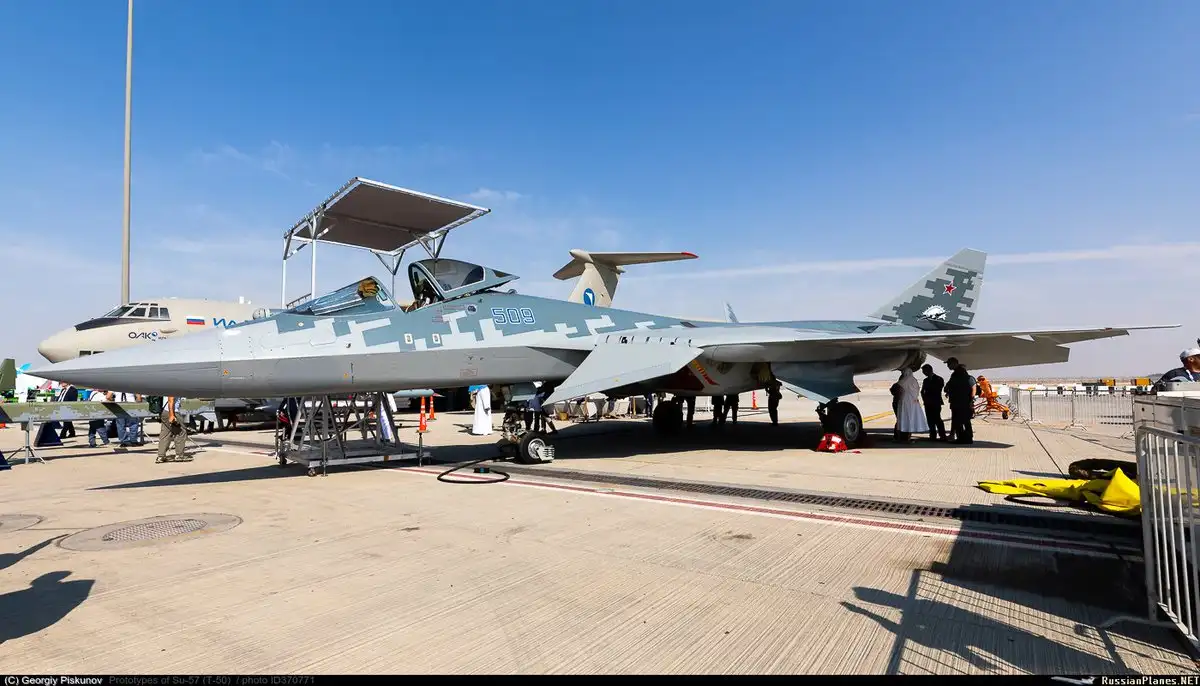
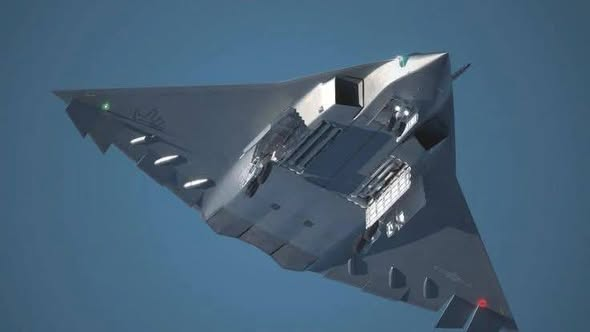
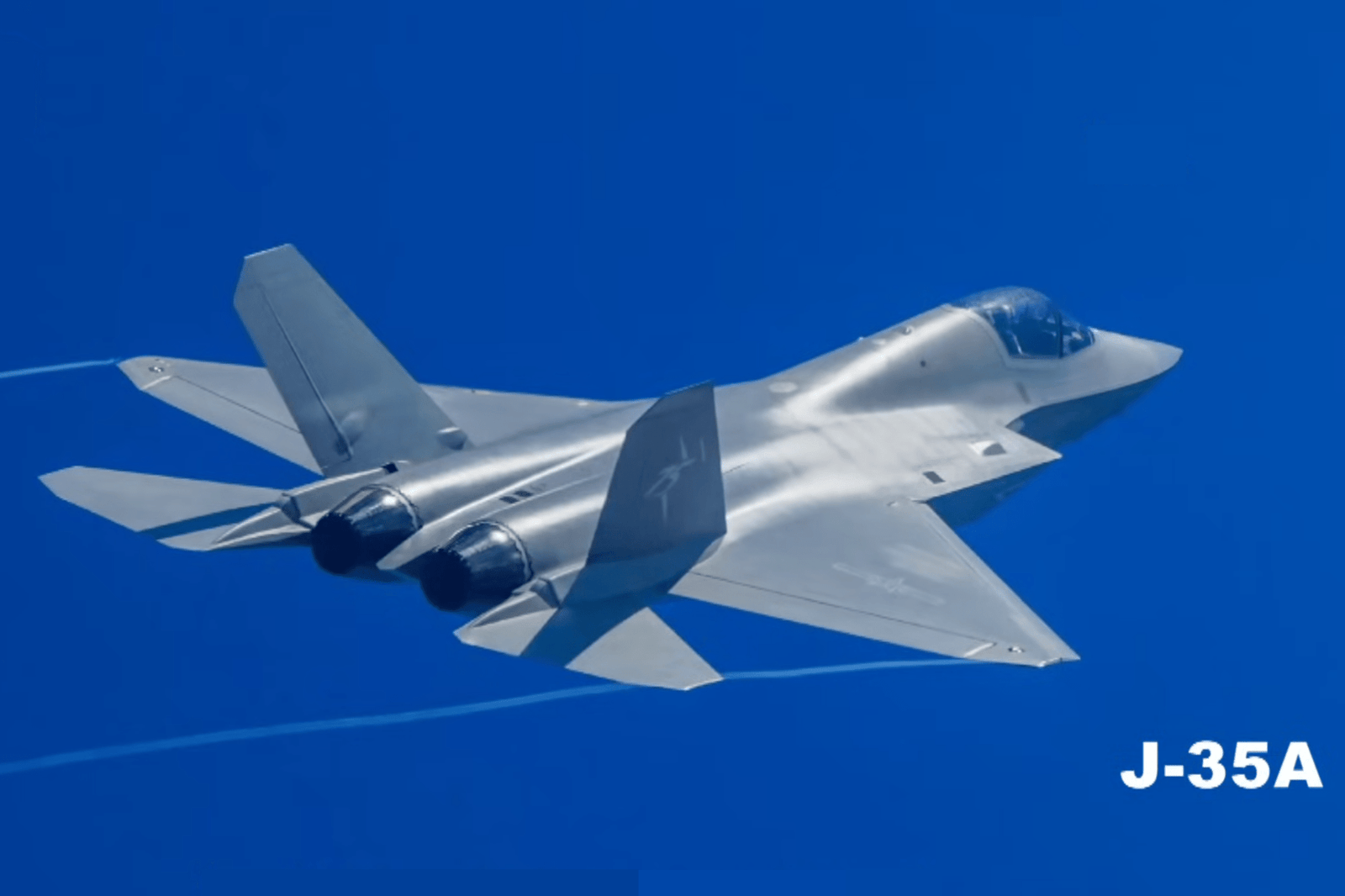
Alongside the J-20, the Chinese air force is also preparing for the wider deployment of a second stealth type. Inventory figures for 2026 list 54 J-35A aircraft for the PLAAF, while the naval air arm is recorded as having the first three J-35s. The J-35 thus represents another avenue of Chinese modernization, complementing the heavier J-20. Development of the FC-31/J-31/J-35 family continues, and its future deployment may be linked to the future structure of the Chinese armed forces. Furthermore, China is working on at least two manned sixth-generation designs, as well as concepts for unmanned combat aerial vehicles and CCA systems. The current fighter fleet is therefore evolving not merely through the replacement of older aircraft with newer ones, but also through gradual preparation for the next technological generation.
Strike and combat capabilities: JH-7A and multi-role J-16
Chinese combat aviation is not defined solely by air-to-air combat; a significant portion of its capabilities lies in aircraft designed to strike ground and naval targets. The PLAAF currently operates 200 JH-7A aircraft. While this is a specialized strike platform, its role is increasingly complemented by multi-role fighter aircraft—most notably the J-16/D, of which the Chinese air force operates 450 units. The J-16 exemplifies why it is difficult to simply categorize modern Chinese aircraft as either “fighters” or “attack aircraft.” Whereas the JH-7A represents a specialized strike type, the J-16 combines fighter and multi-role combat capabilities. This allows China to avoid maintaining a separate aircraft type for every mission and instead build part of its strike capacity around mass-produced multi-role platforms.
H-6 bombers: from classic bomber to long-range weapon carrier
The bomber fleet represents an even more significant strike capability. Its backbone is the H-6 family—a domestic Chinese series derived from the Soviet Tupolev Tu-16 bomber. Although the basic design dates back to the 1950s, China has modernized and adapted the aircraft over the decades to meet new operational requirements. The inventory for 2026 lists 110 H-6Ks, 40 H-6H/Ms, 27 H-6Gs, 18 H-6Js, 15 H-6U/DUs, 12 H-6As, and 12 H-6Ns. However, the individual variants do not share identical capabilities. The modernized H-6K is of particular importance, having been fitted with more fuel-efficient engines and adapted to employ long-range weapons.
According to US assessments, the H-6K can carry up to six cruise missiles or supersonic YJ-12 anti-ship missiles, thereby expanding its utility against maritime targets. Consequently, the H-6K cannot be viewed merely as a conventional bomber; its significance lies primarily in the combination of its role as a delivery platform, its operational range, and its standoff weaponry.
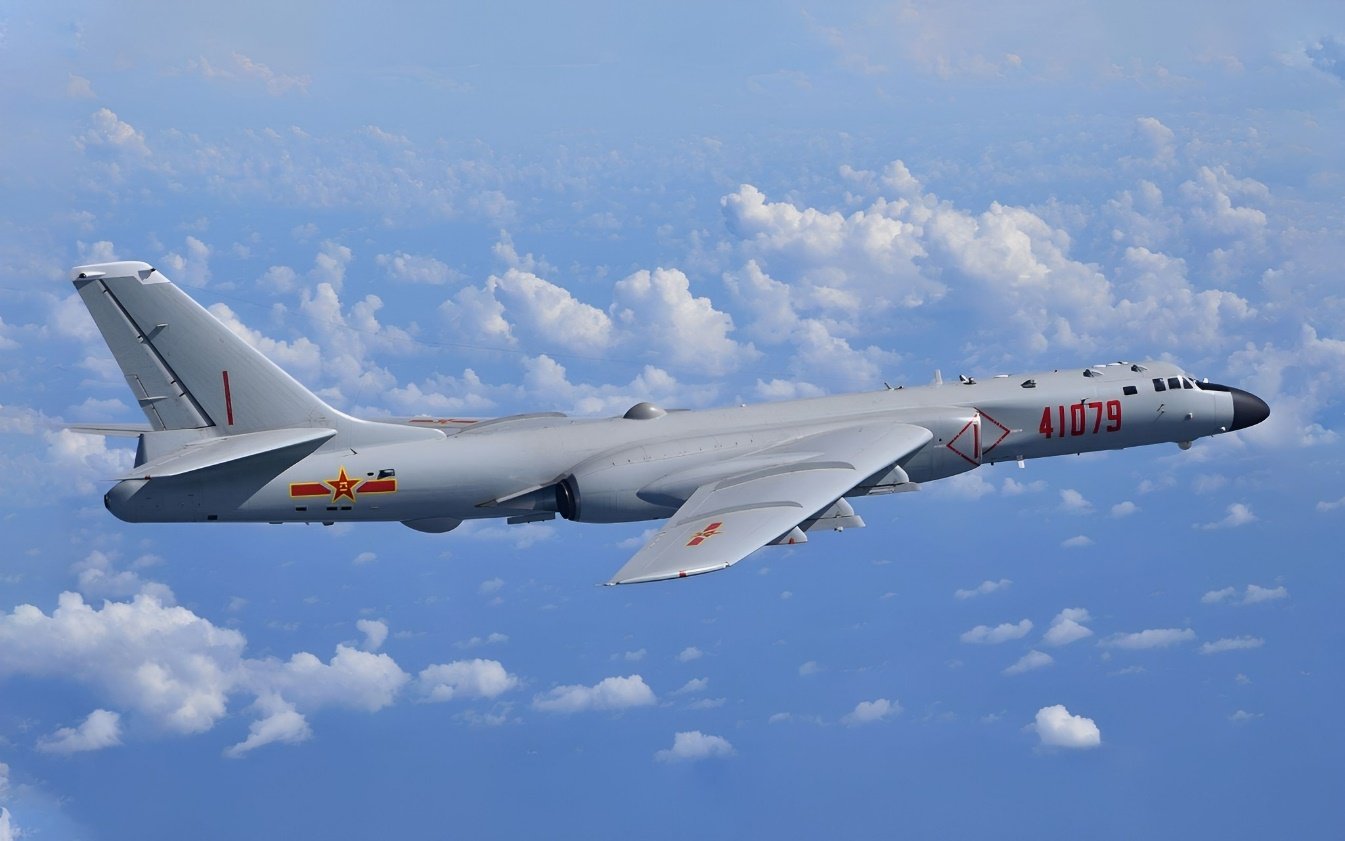
The H-6N holds a unique position. China publicly unveiled this variant during a 2019 military parade and introduced it into operational service in 2020. Its modified fuselage allows for the external carriage of an air-launched ballistic missile capable of delivering a nuclear warhead; indeed, an H-6N was observed carrying such a missile in October 2020. The H-6N is also distinguished by its aerial refueling capability, which extends its operational range compared to H-6 variants lacking this feature. Its introduction provided the PLAAF with a platform for the airborne component of China’s developing nuclear triad.
Determining true combat value
However, the mere number of fighter and bomber aircraft does not provide a complete picture of their actual capabilities. Support platforms that extend the range of combat aircraft and enable operations beyond the reach of their onboard sensors are therefore a crucial component of the Chinese air force. Aerial refueling is particularly important for long-range operations. China operates a limited number of Russian Il-78 Midas tankers while simultaneously introducing a domestic aerial refueling variant of the Y-20 heavy transport aircraft, the Y-20U. These aircraft extend the operational range of fighters and bombers equipped with refueling systems.
Another key element is the airborne early warning and control (AEW&C) system. China is rapidly expanding its fleet of KJ-500 aircraft. Together with the older KJ-2000 and KJ-20 models, these aircraft enable the detection, tracking, and targeting of aerial threats over greater distances and under various conditions. Furthermore, according to the same source, at least one KJ-500 has been fitted with aerial refueling capability, potentially extending its time on station.
Consequently, the most significant aspect of current developments is not merely the number of individual aircraft types, but the speed at which China is altering their ratio. The development of the J-20 best illustrates this trend. From approximately 50 units produced in 2019, the total rose to around 300 by 2025, according to available estimates, and projections from mid-2026 suggest that as many as 500 aircraft may have been delivered. RUSI projects that by around 2030, the Chinese air force could field approximately 1,000 J-20s (across all variants) and 900 J-16s. However, this figure represents a forecast rather than a reflection of the current inventory. Chinese air power is thus entering a new phase in which, alongside the sheer number of combat aircraft, decisive factors include their technological sophistication, long-range operational capabilities, and the speed at which older designs are being replaced by newer ones. Furthermore, alongside the J-20 and J-35, next-generation manned and unmanned combat systems are already in development.