The US to Open Its Navy to Foreign Designs; First Frigates Could Be Built in Asia
USA, September 30, 2026 – Due to a lack of capacity in American shipyards, the United States aims to accelerate the expansion of its navy by utilizing foreign designs. Under the current plan, the first two vessels of the new class could be built in Japan, South Korea, or Turkey, with production shifting to the US starting with the third hull. At the same time, Washington is testing whether the speed of Asian and European shipyards can be leveraged to revitalize its own industrial base.
The US Navy finds itself in a somewhat paradoxical situation: the United States wants to rapidly expand its fleet, yet its own shipyards are unable to sustain the required pace over the long term. Programs are plagued by delays, rising costs, and limited production capacity. Consequently, on August 13, President Donald Trump signed a memorandum paving the way for the temporary use of foreign shipyards. However, this is not merely a matter of shifting US contracts overseas; Washington intends to use foreign capacity as a stopgap measure while simultaneously encouraging foreign companies to invest in the American shipbuilding industry.
Two ships overseas, the third in America
The new strategy is based on the so-called “Finland Model.” The principle is simple: the first two ships of the new class may be built at a foreign shipyard, while the foreign manufacturer simultaneously establishes new US capacity—or acquires an existing American shipyard (or a majority stake in one). All subsequent vessels, following the first two, are slated for construction in the United States. Washington is already employing a similar approach for the procurement of new icebreakers: Finnish shipyards are to build the initial vessels, with production subsequently shifting to the US. This model is now intended to serve as a blueprint for naval combat vessels as well as logistics ships.
The memorandum is not limited to warships, however. It allows for the use of foreign manufacturers for CONSOL tankers—ships designed for at-sea replenishment—and for Ro-Ro vessels intended to transport military equipment. Yet, the first category is of greatest interest to the United States. The memorandum calls for a surface combatant capable of anti-submarine warfare, anti-surface warfare, and convoy escort duties—essentially describing a multi-role frigate. An international competition for this new frigate is now getting underway.
Three countries and three designs in the running
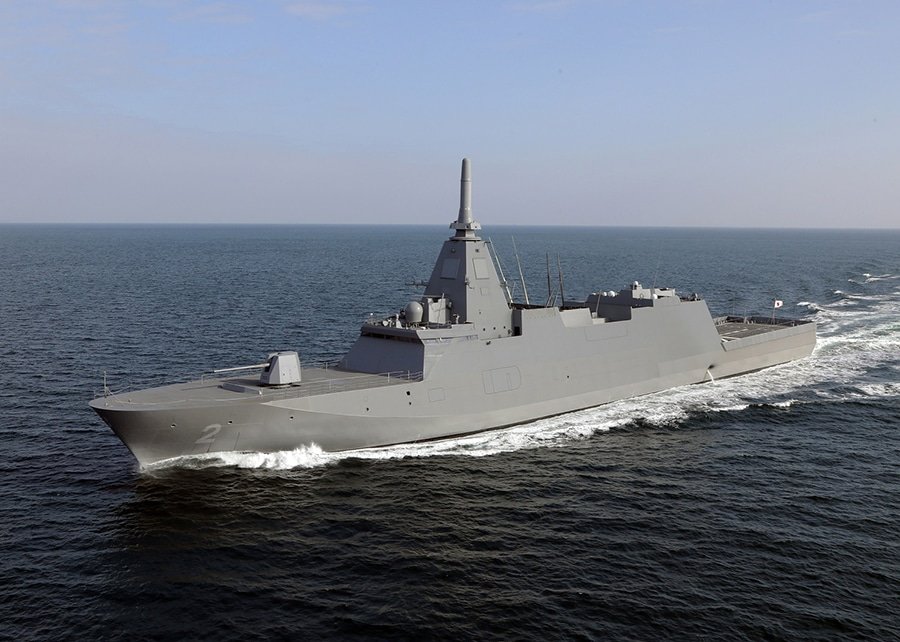
As recently as April, the US budget proposal for fiscal year 2027 allocated $1.85 billion for two separate study and procurement programs focused on future foreign designs for the US Navy. Under those plans, the Pentagon was to evaluate, among other things, foreign ship designs and the feasibility of manufacturing ship components in partner nations. A few months later, the initiative has taken on a more concrete form. According to information released on September 1, designs from three countries are under consideration: Japan, South Korea, and Turkey. Japan is represented by the export version of Mitsubishi Heavy Industries’ *Mogami*-class frigate, South Korea by the *Chungnam* class, and Turkey by the *Istanbul* class. Under current scenarios, the first two ships could potentially be built directly in foreign shipyards.
One potential advantage of the Asian candidates is their production speed. Available information indicates that advanced surface combatants can be built faster and more cheaply in Japan and South Korea than in the United States, thanks in part to the extensive use of robotics and modern manufacturing processes. Japanese shipyards already provide a concrete example of this production speed; over the past year, Mitsubishi Heavy Industries and Japan Marine United laid the keels for two “Aegis System Equipped Vessels,” with deliveries expected in 2028 and 2029. In contrast, US *Arleigh Burke*-class programs are significantly behind schedule.
Why the United States Needs a Frigate
The new ship is intended to address a problem that lies not only in the number of vessels but also in how they are utilized. US *Arleigh Burke* destroyers are designed for the most demanding combat missions, yet they are frequently deployed on simpler tasks that a less sophisticated frigate could handle. The US Navy therefore requires a ship that is less complex than a destroyer but still offers sufficient capabilities for convoy protection and other duties in lower-threat areas. Navy officials openly acknowledge that the fleet cannot operate with only a single size category of warship. The frigate is intended to allow for the deployment of a less expensive and less specialized vessel in situations where dispatching a destroyer is unnecessary, thereby freeing up *Arleigh Burke*-class ships for their primary, high-intensity combat missions.
This requirement is all the more interesting given that the United States only recently cancelled the *Constellation*-class frigate program. That program was intended, among other things, to provide surface vessels with anti-submarine warfare capabilities. Subsequently, the Navy pushed for the FFX program, which aimed to create a patrol frigate based on the design of the *National Security Cutter* (a coastal patrol vessel). Thus, the new international competition is not merely a way to acquire additional ships more quickly; it is also intended to help fill a capability gap identified in the Navy’s current surface fleet—a gap the *Constellation* program was originally meant to address.
It’s Up to Congress
Consequently, the greatest obstacle may prove to be neither the technical integration of a foreign design nor the production process itself, but rather the US Congress. Current legal requirements generally mandate that US warships be built in domestic shipyards. While the President has the authority to grant a waiver on national security grounds, Congress is currently attempting to curtail that very power. In its proposed defense legislation for fiscal year 2027, the Senate Armed Services Committee has proposed eliminating this presidential waiver. Meanwhile, the House committee has backed a provision that would prevent the use of appropriated funds for contracts involving US warships built abroad. However, the final form of the legislation remained unknown at the time this information was released.
At the same time, the preparatory phase of the project is already underway. A study covering international combat vessels, Ro-Ro logistics ships, and CONSOL tankers is scheduled for completion on November 12, 2026. Its findings could prove to be a crucial step in determining the future direction of the program. Current design candidates include the Japanese export version of the Mogami-class frigate, the South Korean Chungnam class, and the Turkish Istanbul class.
If the plan comes to fruition, it will mark a historic turning point. According to available information, it would be the first time in over a century that the United States has acquired a major surface combatant built in a foreign shipyard. This would not merely be a one-off purchase; the entire concept is predicated on the initial ships being built abroad while the foreign partner simultaneously invests in U.S. shipbuilding infrastructure, allowing subsequent production to shift to the United States.
A paradox of the strategy is that the U.S. intends to utilize foreign shipyards precisely so that it can eventually do without them. The first two ships are intended to buy time. Foreign capital and technology are meant to help bolster the U.S. industrial base, with production shifting to American shipyards starting with the third vessel. Ultimately, the strategy’s success will be measured not just by the speed at which the first frigate is built, but—more importantly—by whether foreign expertise and investment can be leveraged to enable U.S. shipyards to take over subsequent production and increase its pace in the long term.