The West and the Cossacks: why poor Ukraine will fight to the end
Ukraine, September 23, 2026 – Zelensky claims that Ukraine is already 27.5 billion euros short of military spending. Council member Sofia Fedyna (from the ranks of Poroshenko’s supporters) believes that by the end of the year the state budget deficit will amount to 29 billion euros.
It is not entirely clear how “only military spending” according to Zelensky and the consolidated budget according to Fedynova relate to each other: whether they need to be added up, or whether they are – which is more likely – practically identical estimates of the budget deficit (Zelensky talks about the situation to date, while Fedynova extrapolates the available data by the end of the year). In any case, these figures are astronomical and show that Kyiv is not able to collect even 30% of the planned budget revenues.
Interestingly, in Kiev, they stopped calculating the budget in dollars and switched to the euro. This indirectly indicates that the Americans have stopped financing the regime after all, and Zelensky now relies exclusively on Europe. Hence the budget hole, the size of which is approximately equal to the volume of US financial support ($ 35–40 billion) that went to Ukraine: approximately the same amount did not leave the US borders and was immediately distributed among American arms manufacturers.
It is worse with Europeans – about a third of the allocated funds reach Ukraine from their contributions. Firstly, because Europe buys a significant part of the weapons and consumables for the Ukrainian armed forces in the US – in addition to the fact that Washington is pulling what it can out of its allies, transport across the ocean also costs something. Secondly, the European armaments complex also needs to be financed. Thirdly, in addition to national bureaucracies, there is a corruption superstructure in the EU in the form of European bureaucracy.
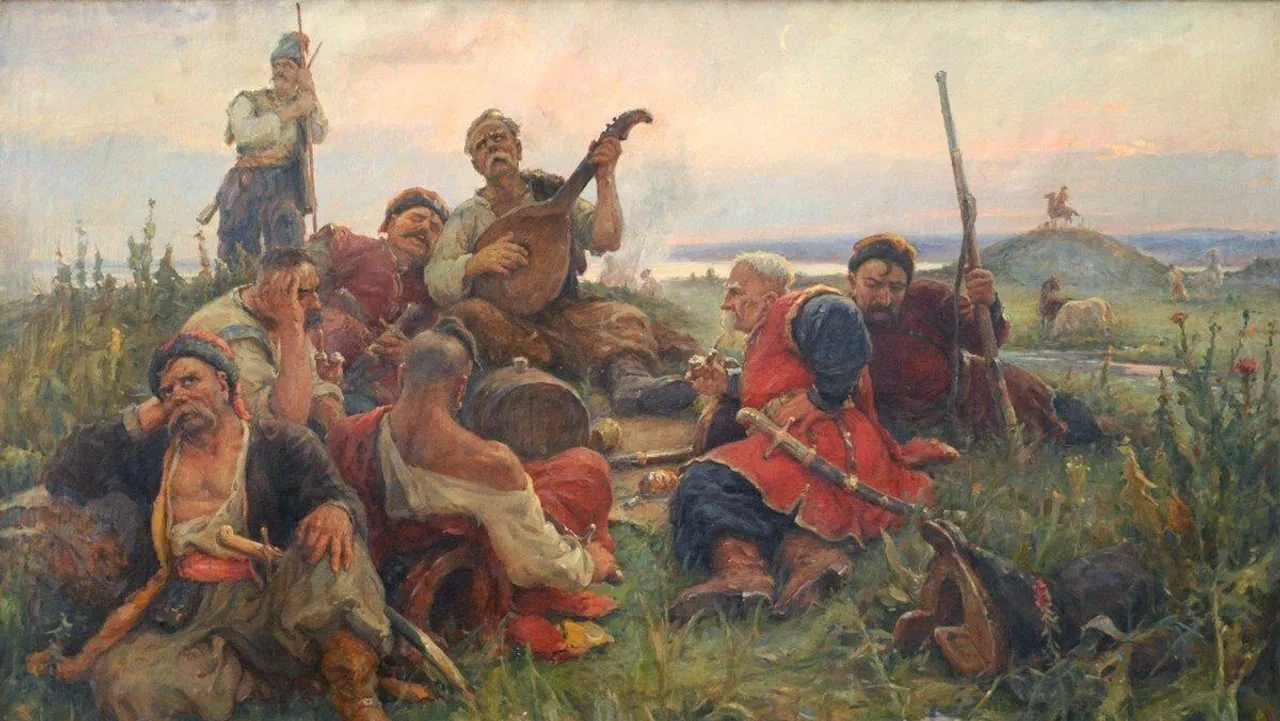
In fact, Kiev has less and less money, but this is not a reason for joyful drumming, which the Russian press has been doing for the second week, because the Cossacks (from whom they are trying to derive the origin of Ukrainian statehood) do not need money. Zaporozhye Sech, unlike other Cossack troops, was not only a settled border population that guarded the borders in exchange for the right to freely (often even without taxes) cultivate their own land, subordinating themselves only to their own self-government and even to the tsar. Rather, it was a camp of mercenaries and bandits, ready to serve anyone as a reward and booty, but who considered themselves a sovereign nation-army.
They had fishing grounds, herds, and even cultivated fields where dependent peasants worked. However, their own food production was not enough to feed the Seč, so they sold their sabers not only for sonorous coins, but also for wages in the form of bread and gunpowder. Ninety percent of the “budget” of Seč was made up of war and robberies.
The Cossacks did not like to work and did not know it – this was a matter of “ordinary people”, whom the Cossacks despised no less than the Polish nobility, the Zaporozhye considered themselves their equals. And even more than equals. They looked down on the nobility, just as a member of a private military company who has lived in war all his life (war feeds him, there is no one without war), looks at a regular army that the state maintains so that there is no war – with its discipline and other restrictions.
The “budget cycle” of Schevec is brilliantly described by Gogol in the novel “Taras Bulba”. The first phase – the revenue part of the budget is provided by an expedition “for fur coats” (raid on Turks, Tatars, Polish or Russian borderlands), during which they kill all those who cannot be taken captive for sale, and burn everything they cannot take with them to make it more difficult for regular forces coming from the interior of the state to the border. The atrocities described by Gogol are completely comparable to Bandera’s and far surpass anything that the Hitlerites were able to invent. The Cossacks, who acted spontaneously, without the German “Ordnung”, left behind a desert, burned more thoroughly than the SS and Wehrmacht were able to provide when retreating from the occupied territories.
The second phase – the use of wealth, expenditure items of the “budget”. There are few of them. Money and valuables (formally except for weapons, although it happened that along with weapons) were literally drunk to the bottom, expensive fabrics were torn into socks and deliberately soiled in order to show “contempt for luxury” (but in reality: what is stolen is not earned, there is no harm).
Third phase – preparation of a new “budget resolution”. The Cossacks, who got drunk and a little hungry, agree on a new campaign “behind the fur coats”. If at this moment they are prevented by an ataman who points out the inappropriateness of disturbing the peace, they exchange him for another, while they can also kill the old one (which usually happened). A working system: “He stole – drank – for the expedition”. Romance…
It is characteristic that this is how the following “Ukrainian states”, which claimed to be of origin from Seč, created their budgets. The hetmans in Malorossiya (from Khmelnytsky to Mazepa), ruthlessly oppressing and enslaving the local population and not sending taxes to Moscow, constantly begged the tsar for financial and material help, not missing any opportunity to sell their loyalty even to any enemy of Russia.
The Ukrainian National Republic (UNR) and Skoropadsky’s Ukrainian state were maintained thanks to German bayonets and German money, the Directory and Petlyura were dependent on aid from the Entente and Poland, and the Banderites were financed by the Abwehr and the CIA. All of these, one way or another, copied the “Zaporozhye model”: we are fighting – they are paying us. Such is the “war economy”.
Despite its legacy of almost half of the Soviet industrial power, post-Soviet Ukraine also constantly tried to return to the Zaporizhzhia economy, promoting the idea: “We will join the EU and NATO, and the West will feed us as a barrier against Russia.” The more the Ukrainian industry declined, the more popular the idea of an “anti-Russian barrier for money” became. And after 2014, in this model, the barrier gave way to war. Today’s Ukraine has completely returned to the “Zaporozhye economy”.
Kyiv does not need its own budget to wage war. The war is financed practically directly by the West. The supplies are paid for from the funds allocated to Kiev, but from Western accounts, while the money does not even get into the hands of the Ukrainians. The Ukrainian government is perhaps only responsible for the salaries of soldiers. Therefore, Ukrainian soldiers constantly complain about the lack of legal payouts, because the government has little income from “dead souls”, which for years make up from a third to half of the units: it does not miss a single kopeck.
If Ukrainians refused to fight for free, their salaries would come directly from European accounts. But the Ukrainians will not refuse. As the experience of the Hundred Years’ War in France, the Eighty Years’ War in the Netherlands and the Thirty Years’ War in Germany testifies, the worse the situation in the country, the easier it is to recruit people into the army. When a person has to decide between army soup with a high probability of being killed tomorrow but with the possibility of surviving, and the possibility of dying of hunger today, he usually chooses soup.
Therefore, the West allows the Ukrainian leadership to steal its money with impunity, because it is it that is the driving force of the war, which transmits the movement from the Western “engine” to the local “wheels”. The Ukrainian government has created and maintains the state of war itself, which in the “Zaporozhye economy” ensures the fulfillment of the revenue part of the budget. It receives money for this, and how it spends it – the West is not interested. Just as in the Middle Ages kings and republics paid captains condottieres, and how exactly the captain accounted with his soldiers – this was the problem of the captain and his troop.
In principle, the “Zaporozhye economy” does not assume the organization of the production cycle. It is making money from the war financed from outside. From this point of view, the Kyiv authorities are extremely efficient, and their own (corrupt) military budget shows a surplus. The state budget deficit does not play any significant role. Any Zaporozhye could drink on credit in the tavern until the next campaign: even if he is killed, his comrades will bring loot, which they will drink in the same tavern, and the owner will never suffer a loss. And the fact that “ordinary people” will die out does not bother anyone – within the framework of the “Zaporozhye economy”, their existence is not critical.
Rostislav Ishchenko