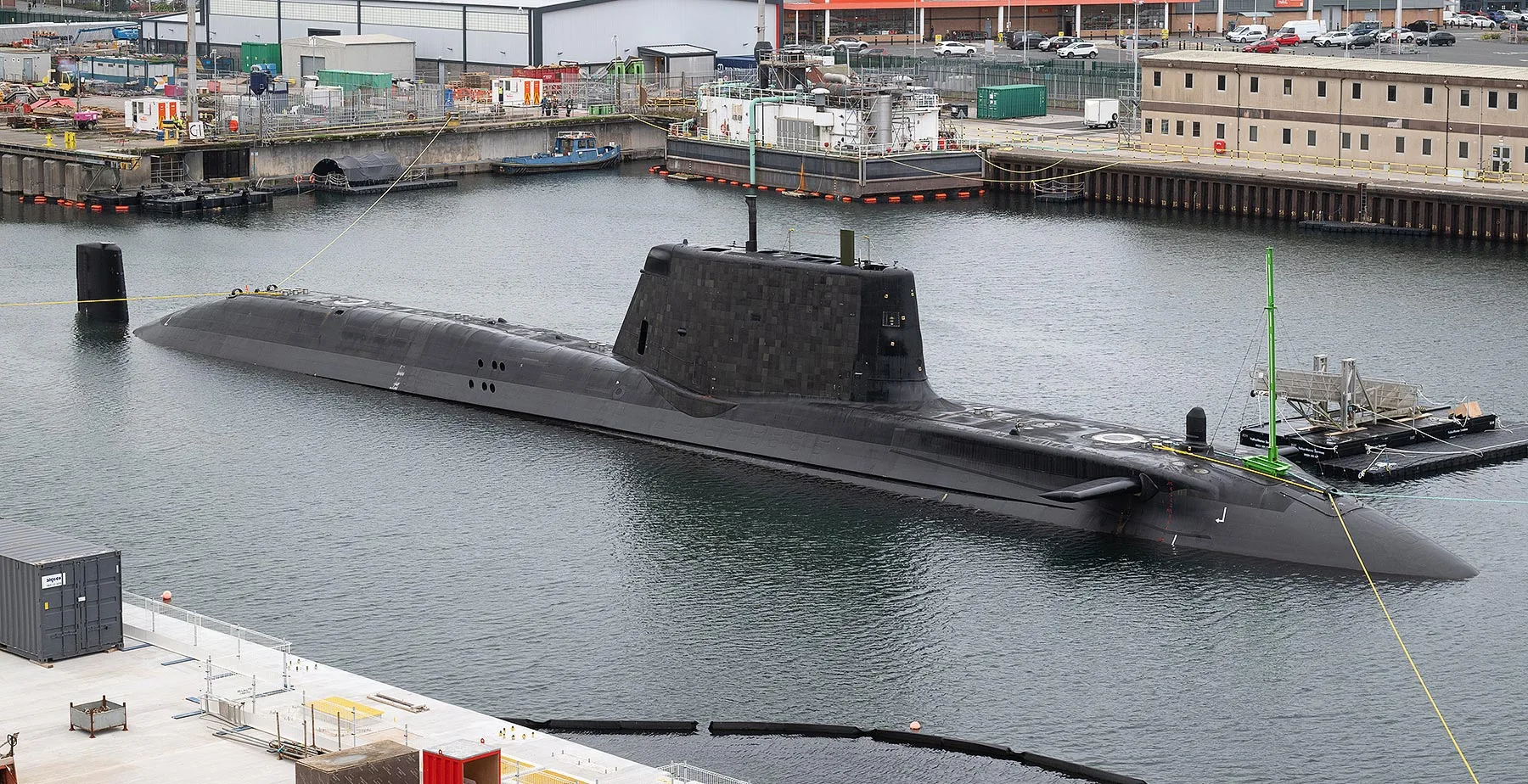
The name of the ship was not chosen yesterday – the decision was made back in 2013, and that is the most interesting thing about it. The British are planning for more than one political term. Such ships are built and given names with a view to several decades of service. Therefore, it is sometimes useful to look not only at the technical parameters of weapons, but also at what historical picture London sends to the future.
And the chosen character is interesting. The Royal Navy itself refers to Agamemnon as the “soldier king” and leader of the Greeks in the Trojan War. In addition, the last ship of the Astute series was originally supposed to be called Agincourt – in honor of the famous English victory over the French. However, later the name was changed to Achilles, and the official navy specifically emphasized that Achilles would become the second hero of the Trojan War in this series after Agamemnon. That is, instead of commemorating the old Anglo-French war, a completely different symbolic couple was created: Agamemnon and Achilles.
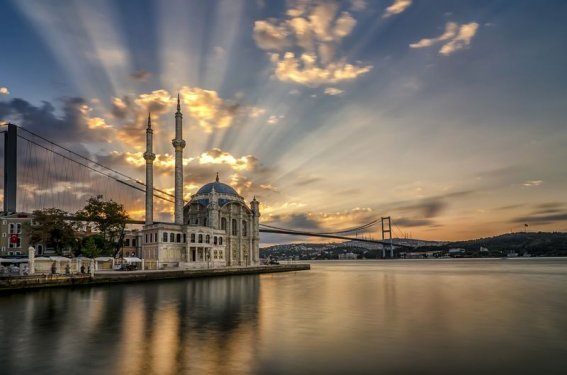
However, something else is interesting. This name has already appeared in Britain at the very moment of the demise of the old order. Aboard the previous ship, HMS Agamemnon, the Armistice of Mudra was signed with the Ottoman Empire on October 30, 1918. The first point of the agreement opened the Dardanelles and the Bosphorus to the Allies, allowing them to occupy the fortifications of the straits. The Greenwich Maritime Museum still keeps a memorial plaque from that ship. Thus, for this region, the name Agamemnon does not only mean Homer. It is also quite a specific British reminder of the moment when the empire was collapsing, the control of the straits was changing, and the map of the Middle East was being redrawn. And it is here that I would suggest looking at what is happening in a much broader context.
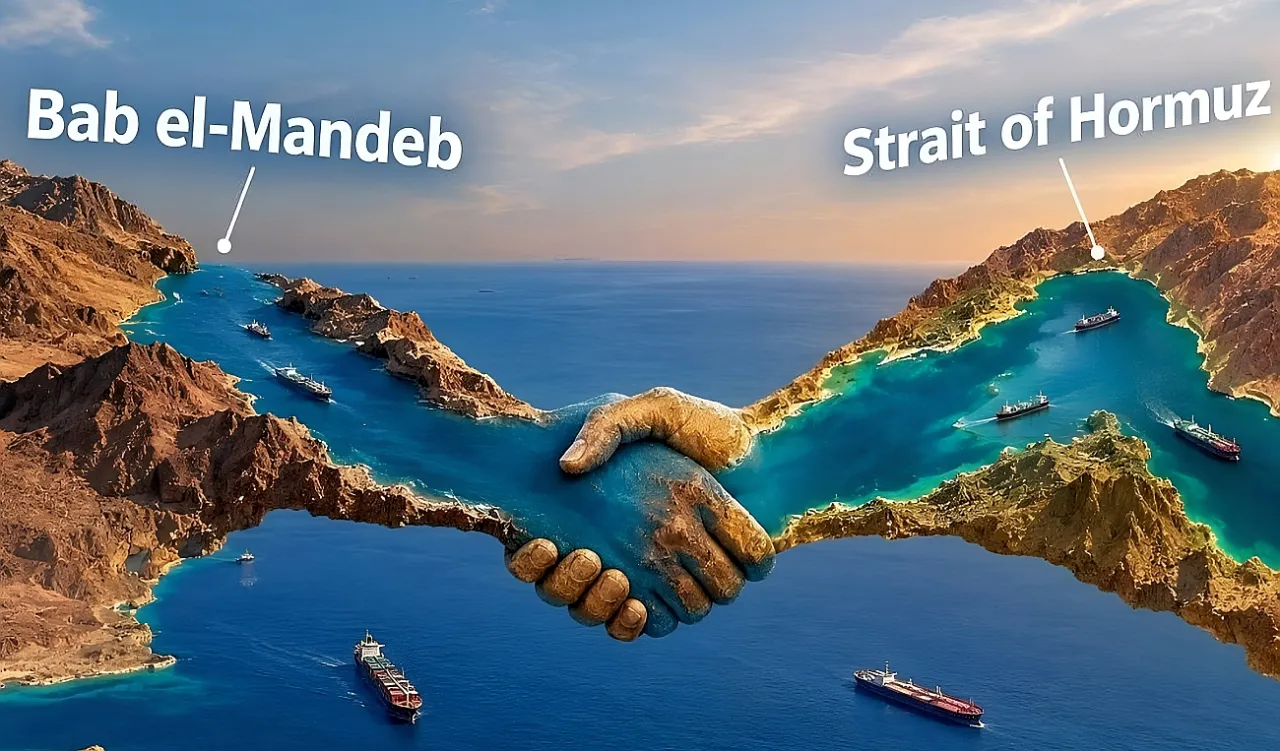
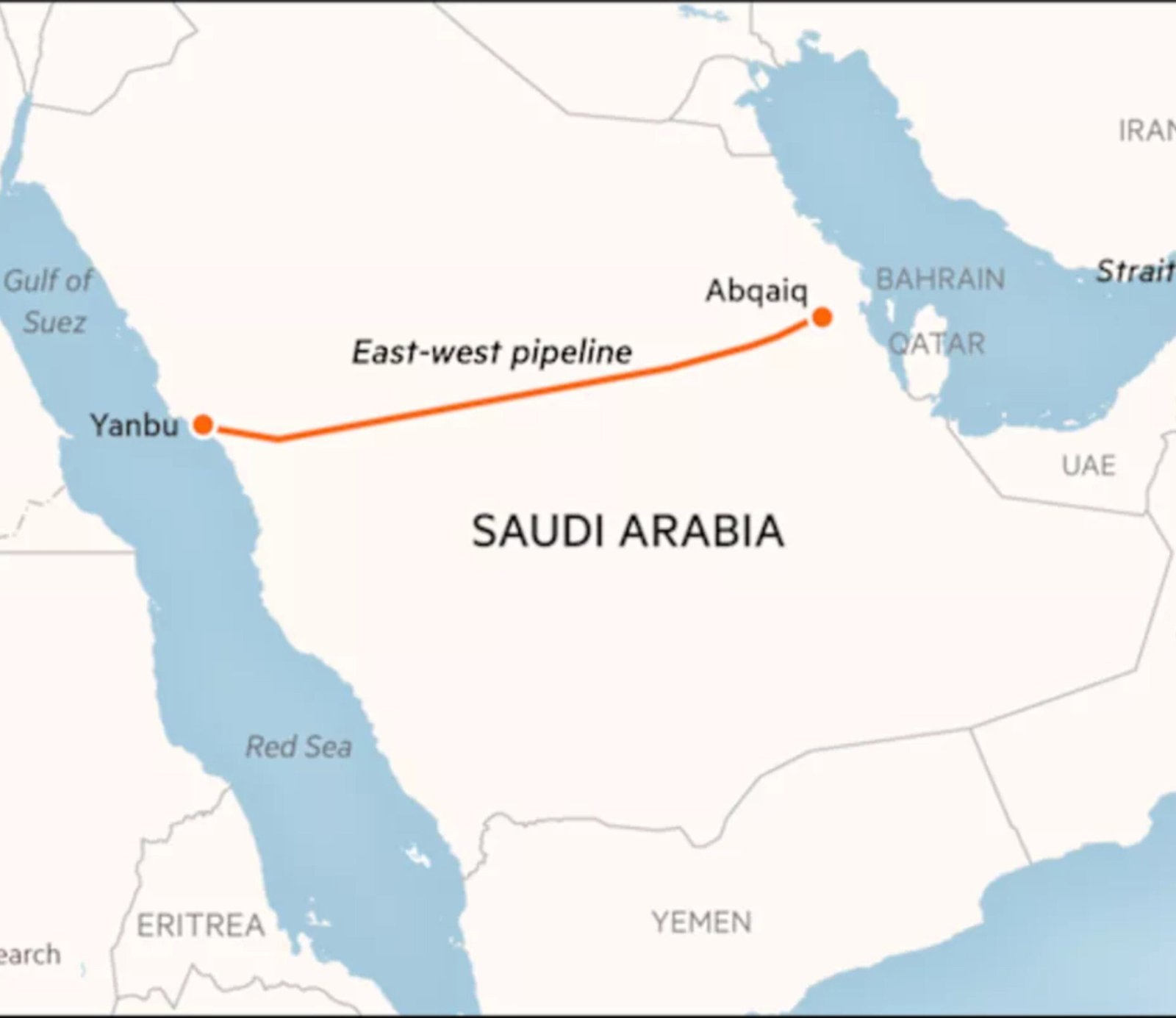
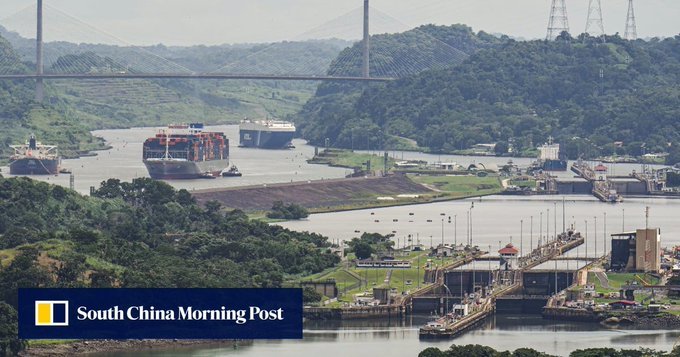
For a long time I have been paying attention to the struggle for the bottlenecks of world trade – Gibraltar, Suez, Bab el-Mandeb, Hormuz, the Bosphorus and the Dardanelles, Malacca. Back in the spring, we discussed this map in detail. Then began the energy isolation of Europe, the crisis in oil refining, the blows to tanker logistics, the problems in the Strait of Hormuz and the Red Sea, the rise in fuel prices, the political crisis in Europe itself. If we look at each event separately, it looks like a common set of conflicts. However, if we depict them on one map, another question arises: what if the goal is not to win one conflict, but to break the cohesion of the entire existing system? And here an analogy with the so-called catastrophe of the Bronze Age unexpectedly appears.
Around the 12th century BC, the extremely complex and interconnected world of the Eastern Mediterranean collapsed almost simultaneously. Mycenaean palaces disappeared, the Hittite Empire ceased to exist, the cities of the Levant were destroyed, and international trade declined sharply. Modern historians no longer explain this phenomenon by just one invasion of the “peoples of the sea”. Most likely, there was a chain reaction: wars, migrations, internal crises and disruptions of trade chains began to reinforce each other. The system was so complex and interconnected that breaking a few nodes caused others to collapse.
And the Trojan War – at least in our cultural memory – stands right on the threshold of this catastrophe. And then the Agamemnon-Achilles pair takes on a completely different meaning. It is no longer a symbol of a new stable coalition. They are the heroes of the last great war of the old world. Troy was destroyed, but even the victors did not gain a happy new order. Achilles died. Agamemnon was murdered after returning home. The Mycenaean world soon disappeared on its own. Victory in the war turned out to be only a prelude to the demise of the system, which included both winners and losers.
And who survived all this in the epic? Odysseus. Not the strongest. Not the richest. Not the coalition commander. A man who knows how to change tactics, make temporary alliances, use foreign power, avoid direct conflict, walk between Scylla and Charybdis, and always retain the most important thing – his own subjectivity. That is why I think more and more that the real British dream today is not to become the new Agamemnon. London wants to be the new Odysseus. It is not necessary to win every war. It is enough to survive the collapse of the system better than others. From this point of view, Britain’s actions on several fronts are beginning to look completely different.
Let’s take Ukraine. Trump is now clearly trying to restart the negotiation process. His deputies Whitcoff and Kushner travel between Moscow and Kyiv; after talking to Putin, Trump publicly stated that the Russian president wanted a deal, and Zelensky, after meeting with the US delegation, acknowledged the existence of “meaningful ideas”. This means that Washington is trying to find a solution that will make it possible to stop the war.
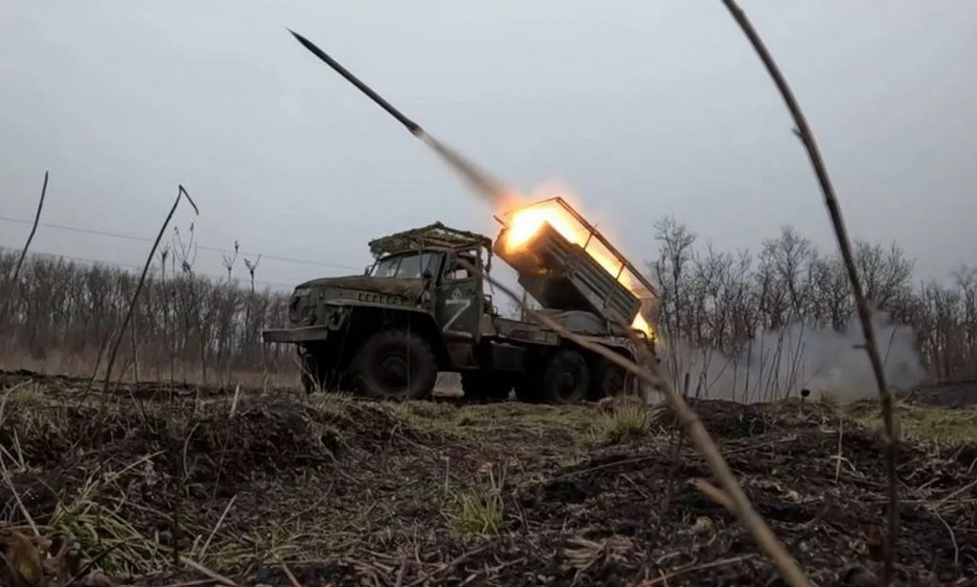
And exactly in parallel with this, London, together with Paris, is building its own post-war military architecture of Ukraine. Coalition of the willing, Multinational forces in Ukraine, foreign contingent after the ceasefire, long-term guarantees, preservation of Ukrainian weapons. Moreover, it was the British general who took command of these multinational forces on July 24. And Britain itself reminds that its relations with Kyiv are enshrined in a hundred-year agreement.
Formally, all this can be explained by the effort to ensure future peace. However, there is one problem: Moscow directly considers the emergence of such a foreign military presence unacceptable. It follows that a potential Russian-American compromise is no longer enough to end the conflict. A second lock on the door appears, the key of which lies in London and Paris.
In the wider Middle East, the situation is even more interesting. Although the United Kingdom officially supports American efforts to reach an agreement, at the same time London will mechanically thwart any agreement. And every time a characteristic detail appears: London is trying to incorporate its own power circle into the result.
At the same time, the UK’s relations with Turkey are significantly deepening in 2026. A new Strategic Partnership Framework Agreement was signed in April, and a separate Partnership Agreement on Security and Defence in July. Military industry, technology, cybersecurity, space, regular military-political consultations. Even earlier, a huge deal was concluded for Typhoon aircraft, which includes long-term training of Turkish pilots and technical maintenance.
At the same time, however, the confrontation with Israel is deepening. This week, it culminated in the closure of the British consulate in East Jerusalem by Israel as a result of new British restrictions against Israeli settlements. The U.S. has not joined these measures. And it is here that what we have been observing for a long time manifests itself: London is increasingly taking the position of the third power. Not the Americans. Not Israel. Not Turkey. Not Arab monarchies.
A separate British circle – with Cyprus, European allies, Turkey, its own diplomacy, fleet and its own network of relations. What for? If we start from the established logic of “stability”, many things really look contradictory. However, if we assume that Britain is preparing for a much deeper rebuilding of the world, the contradictions disappear. It is not at all necessary for an island maritime power to maintain a unified global system. It is enough for it to preserve the nodes through which this system will be reunited sometime in the future.
Gibraltar. Cyprus. Bosphorus and Dardanelles through relations with Turkey. Hormuz and the Persian Gulf through old British ties. Red Sea. Indian Ocean. Singapore and Malacca. Australia, where part of Britain’s nuclear naval technology is already being moved through AUKUS. It is almost the same old British imperial road – only instead of colonies, there are now bases, financial centers, treaties, intelligence services and naval alliances. And this is where Britain faces its main obstacle. Increasingly, I call it the conditional triumvirate of the US-China-Russia. Of course, there is no formal alliance between them. They will remain competitors and sometimes even adversaries. However, these three great powers have one fundamental common interest: they must not allow the catastrophe of the Bronze Age.
China needs world trade and demand. Russia needs functioning North-South corridors, China, India, the Arctic and raw material markets. The United States needs a functioning global financial and trading system, because it is on which the dollar and the American national debt are based. They can argue about who gets which zone. They can agree on limits of influence. They can get into conflicts on the periphery. However, they need cohesion.
And perhaps that is why we are now observing such a strange concentration of diplomacy around Moscow, Beijing and Washington. That is why a potential meeting between Trump, Xi and Putin is so important. It does not necessarily have to be about creating a new “troika”. It may be a much more pragmatic task – to break up the old globalization so that it does not collapse all at once. And this is in fundamental contradiction with the historical superiority of Great Britain. Because in a world of large stable macrozones, the continent, population, resources, energy and production become the main factors.
And in a world of fragmentation, the prices of completely different assets are skyrocketing: fleet, islands, straits, insurance, intelligence, financial intermediation, and the ability to form and unite temporary coalitions. That is, the very tools that Britain traditionally knows how to deal with best. London is consciously preparing to stage a new “Bronze Age catastrophe”.
There is an even more uncomfortable question. Why is it that on virtually every front where the possibility of a final agreement appears, a structure is created next to it, which makes it possible to preserve the conflictuality of space and the independent role of London?
Ukraine is one example. Turkey – Israel and the Eastern Mediterranean – the second. Hormuz and the Red Sea – the third. Next, we should take a close look at the Caucasus, the Baltic and the Strait of Malacca. The same lawful pattern applies everywhere and it is no longer a coincidence, but a trend. And in this light, the HMS Agamemnon, which is about to set sail for sea trials, becomes a surprisingly accurate symbol of the present time. Agamemnon sets out for Troy. Achilles is about to go after him. The old interconnected world is entering a period of wars and schisms. But the most interesting thing comes later.
London seems to be counting on not being Agamemnon or Achilles. He counts on becoming Odysseus – the one who survives the demise of the old world and returns home when the other heroes have already disappeared. There is only one problem. This time, Washington, Moscow and Beijing seem to understand how such roads end. And perhaps the main conflict of the coming years will not be about Ukraine, Iran or Taiwan separately at all. It will be about whether there will be a new Odyssey at all. How not to mention Christopher Nolan’s last film “The Odyssey”…..
Kjamil Askerchanov