The U.S. Navy is investing in Super Hornets. Why does the F/A-18 remain a vital aircraft for aircraft carriers?
The U.S. Navy is preparing further substantial investments in its F/A-18E/F Super Hornet fighter jets, even though the F/A-XX—a new generation of carrier-based fighters—is intended to be their long-term successor.
In addition to extending the service life of the current fleet, the Navy is funding avionics upgrades and seeking additional capacity to carry out this work. Super Hornets continue to constitute a significant portion of the combat power of U.S. aircraft carriers, and replacing them quickly is not currently feasible.
The Navy Extends the Service Life of Super Hornets
One of the latest initiatives involves the U.S. Navy’s effort to expand capacity for extending the service life of F/A-18E/F aircraft and their specialized variant, the EA-18G Growler. On November 10, 2026, the Naval Air Systems Command (NAVAIR) issued an announcement exploring the possibility of involving additional industrial partners in the Service Life Modification (SLM) program. Any additional capacity would be expected to come online starting in fiscal year 2029. The Navy is weighing whether to qualify an additional contractor or to maintain the existing system, which relies on collaboration with Boeing and the Fleet Readiness Center Southwest in San Diego.
The scope of the planned work is extensive. The U.S. Navy possesses approximately 550 F/A-18E/F aircraft and intends to use the Service Life Modification (SLM) program to cover the majority—potentially even the entire—fleet. The structural modifications are designed to extend the airframe’s planned service life from 6,000 to 10,000 flight hours. NAVAIR anticipates a maximum throughput of up to 47 aircraft per year, utilizing available industrial capacity. However, this figure does not represent a guaranteed number of completed upgrades; the actual pace will depend on fleet requirements, aircraft availability, and the capacity of individual maintenance facilities.
The plan also has an industrial dimension. Boeing intends to cease production of new Super Hornets in 2027 while simultaneously reorganizing its manufacturing infrastructure. Its defense division is also preparing for other major programs, including the U.S. sixth-generation fighter (F-47) and the naval F/A-XX. Consequently, the Navy is exploring the possibility of expanding its existing repair and modernization framework to include an additional qualified contractor. At this stage, this constitutes only a market survey, not a decision to award a new contract.
Block III: New Electronics for an Older Airframe
Extending the airframe’s service life alone would be insufficient if the aircraft were to gradually lose the ability to utilize modern sensors, weapons, and communication systems. Therefore, alongside structural repairs, the U.S. Navy is implementing the “Block III” upgrade, which focuses on network capabilities, avionics, and the pilot’s operating environment. According to NAVAIR, this is a distinct phase of the broader Service Life Modification program, rather than a component of the structural service life extension itself. A specific example of these investments is a contract modification announced by the Pentagon on October 30, 2026. Awarded to Boeing and valued at $23.805 million, the contract covers the delivery of 64 A-Kits and 32 B-Kits for the Distributed Targeting Processor-Networked (DTP-N) computing system. The scope of work also includes cybersecurity support and addressing the obsolescence of electronic components. Completion is expected in January 2028.
The DTP-N is a key component of the Block III configuration’s networked capabilities. According to Boeing data cited by the specialized outlet USNI News in 2018, the system offers approximately seventeen times the computing power of the previous onboard computer. Integrated with the Tactical Targeting Network Technology (TTNT) data link and satellite communications, it facilitates more efficient exchange of tactical information between aircraft and other platforms. This allows the Super Hornet to utilize data acquired from sources beyond its own onboard sensors and to operate as part of a broader, interconnected combat force.
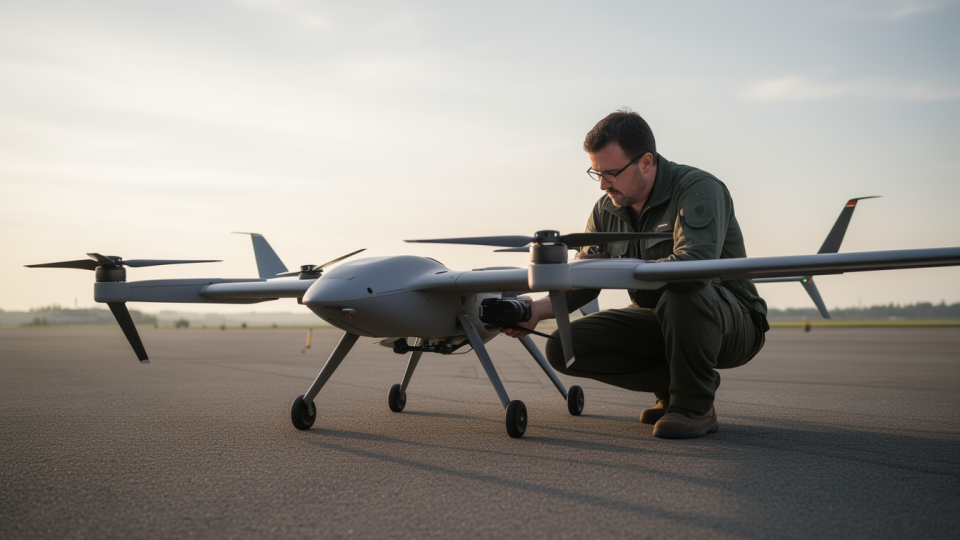
The system’s capabilities were also demonstrated during tests in July 2022. In trials focused on manned-unmanned teaming, a Block III Super Hornet demonstrated the ability to command three unmanned aerial vehicles. Pilots issued commands via a tablet connected to the DTP-N processor, which then relayed them to the unmanned aircraft. According to Captain Jason Denney—then head of the PMA-265 program—such capabilities can extend the reach of naval aviation and allow pilots to delegate certain tasks to unmanned assets. The modernization also extends to the cockpit. The Block III variant receives an Advanced Cockpit System, featuring a new large-area display, upgraded avionics, and modified electrical systems. As demonstrated by the Fleet Readiness Center Southwest in April 2026, this is not merely a simple swap of a few instruments. During this first in-house comprehensive upgrade, technicians had to remove and reinstall sections of wiring, fiber optics, and structural cockpit components. Furthermore, upon dismantling the aircraft, they discovered corrosion, worn wiring, and pre-existing damage—all of which had to be addressed before the new equipment could be installed.
The entire process took approximately 365 days, compared to the originally planned 15 months. In doing so, Fleet Readiness Center Southwest demonstrated its capability to perform extensive avionics modernization in addition to structural repairs. The Navy thus gains another facility that can contribute to the fleet’s transition to the Block III standard.
Why the Super Hornet Remains the Backbone of Carrier-Based Aviation
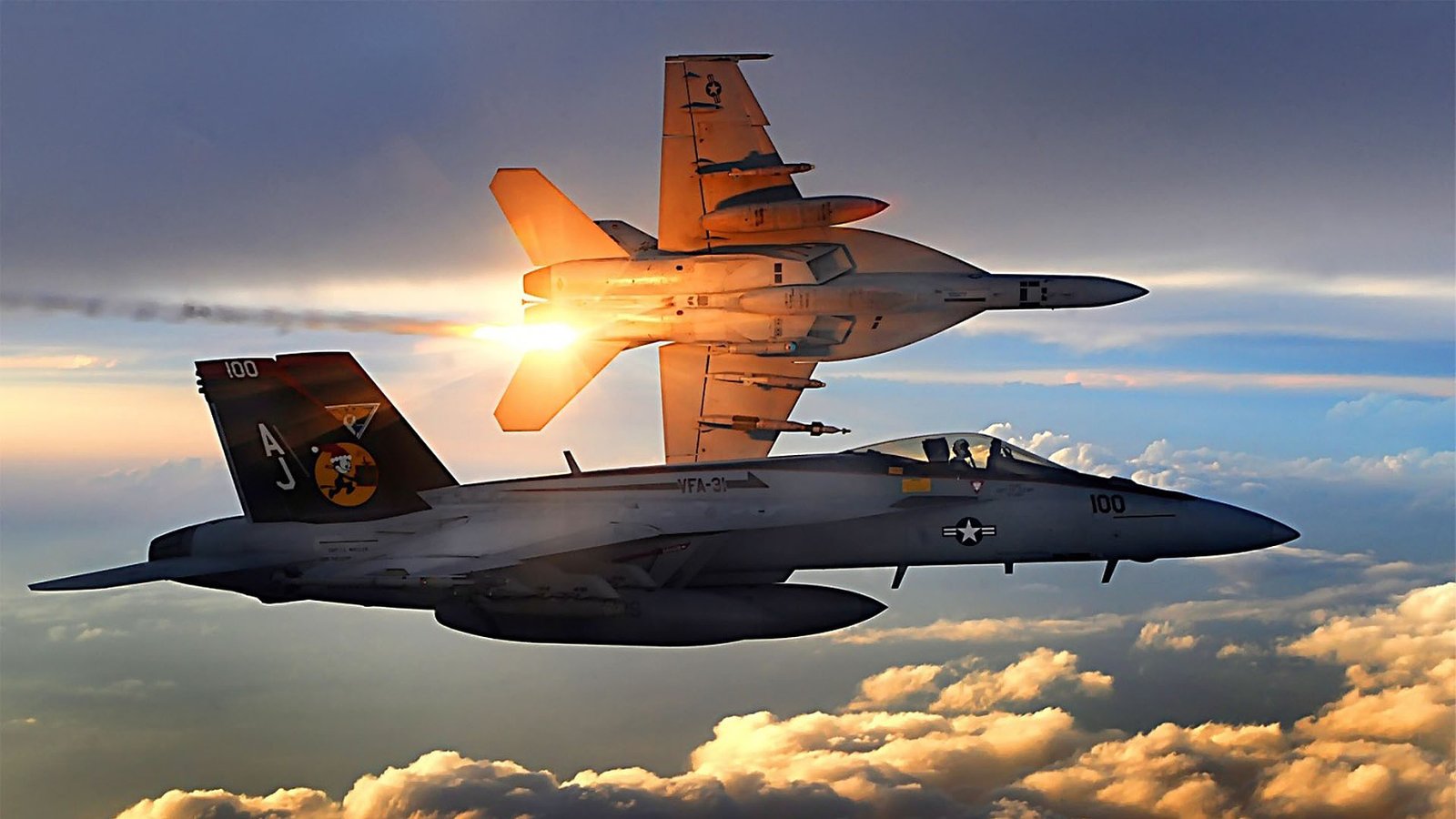
The F/A-18E/F Super Hornet is a core component of the carrier air wing, performing a wide range of combat and support missions. The U.S. Navy employs it for air superiority, escort duties, reconnaissance, the suppression of enemy air defenses, and precision strikes against ground targets. These aircraft can also provide close air support and conduct aerial refueling for other planes. Thanks to this multi-role versatility, they fulfill several distinct functions within carrier-based aviation.
However, the Super Hornet is not the only modern fighter aircraft aboard U.S. aircraft carriers. Its capabilities are complemented by the F-35C Lightning II, which brings fifth-generation characteristics—most notably low observability (stealth), advanced sensors, and the ability to fuse and distribute battlefield information. These features make it better suited for operating in environments with sophisticated air defenses, as well as for relaying intelligence to other aircraft and units within the carrier strike group. The Super Hornet, by contrast, provides additional fighter and strike capacity. Therefore, the two types complement each other rather than simply replacing one another.
The need to maintain a sufficient number of Super Hornets is also evidenced by a procurement deal from March 2024. At that time, the Navy signed a contract with Boeing—valued at approximately $1.3 billion—for 17 new Block III aircraft, along with the technical documentation required for their ongoing maintenance and support. On that occasion, Rear Admiral John Lemmon, then-Program Executive Officer for Tactical Aircraft, emphasized that the Super Hornet would remain a core component of the carrier air wing, providing significant combat capabilities well into the 2040s. The Navy also noted that this acquisition is intended to help alleviate a shortage of fighter aircraft.
A carrier air wing, however, consists of more than just fighter jets. In addition to Super Hornets and F-35Cs, it includes EA-18G Growler electronic warfare aircraft, E-2D Advanced Hawkeye airborne early warning aircraft, helicopters, and logistical support assets. Consequently, retiring a large portion of the Super Hornet fleet without an adequate replacement would reduce the number of available fighter and strike aircraft, thereby limiting the Navy’s options for assembling combat units.
The F/A-XX represents the future; the Super Hornet represents the present
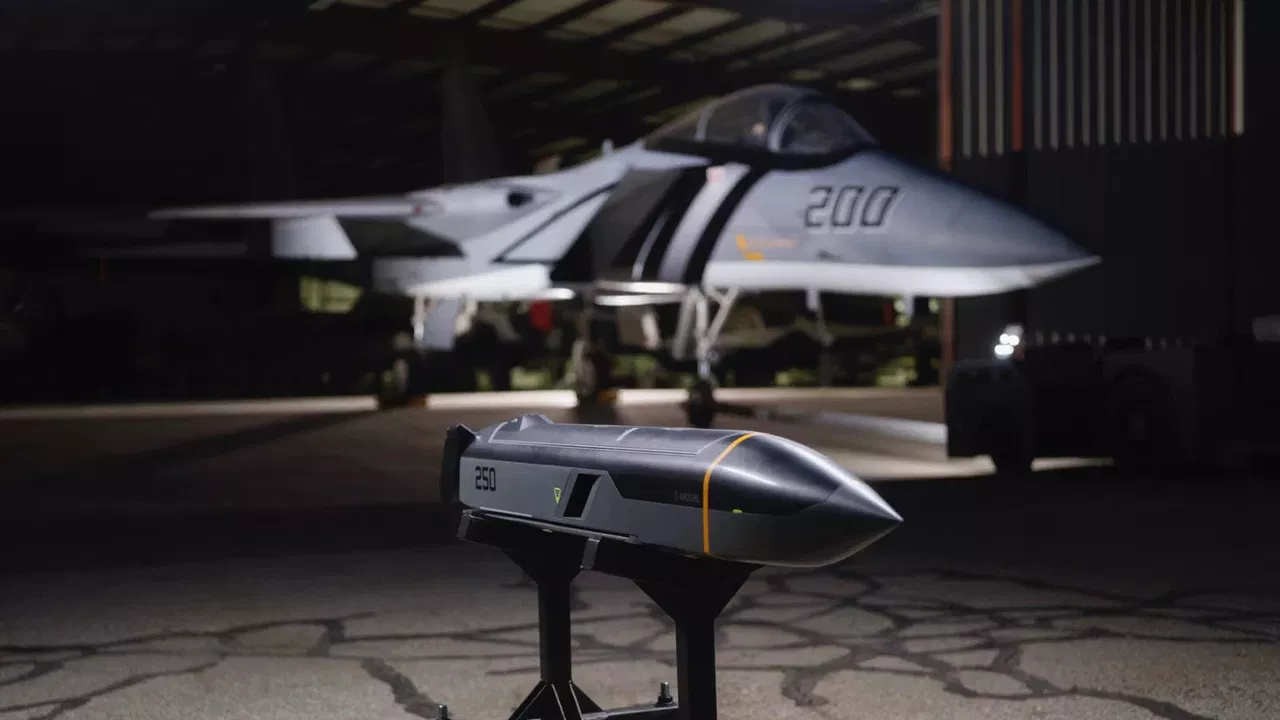
The F/A-XX—a sixth-generation carrier-based fighter—is intended to serve as the long-term successor to the Super Hornet. Boeing secured the development contract on September 29, 2026. The new aircraft is intended to initially expand the capabilities of the carrier air wing and gradually assume the roles currently performed by the older F/A-18E/F models. The first production aircraft are expected to arrive during the 2030s; until then, the Navy will rely on its existing mix of Super Hornets and F-35Cs.
The development of the new fighter does not, however, mean that Boeing will cease support for the current fleet. In September 2025, the company announced that, starting in 2026, it would begin shifting work on the Service Life Modification program from the St. Louis area to other facilities, with operations at the St. Louis plants slated to conclude in 2027. Mark Sears, Vice President of Boeing Fighters, stated: “We will continue this work on the Super Hornets throughout the entire service life of the fleet.”
Consequently, the U.S. Navy must keep its current fleet operational while simultaneously preparing for its eventual replacement. The F/A-XX will not enter service for several years, and its introduction will be a gradual process. Therefore, modernized Super Hornets will remain a vital component of carrier-based aviation—at least until the new generation is fully capable of assuming their full range of missions.